Beyond Relays and Records:
How Cooking, Gardening, and a Dog Named Snoopy Bring Balance to an Engineer’s Life
by Mukesh Nagpal, Burns & McDonnell, USA
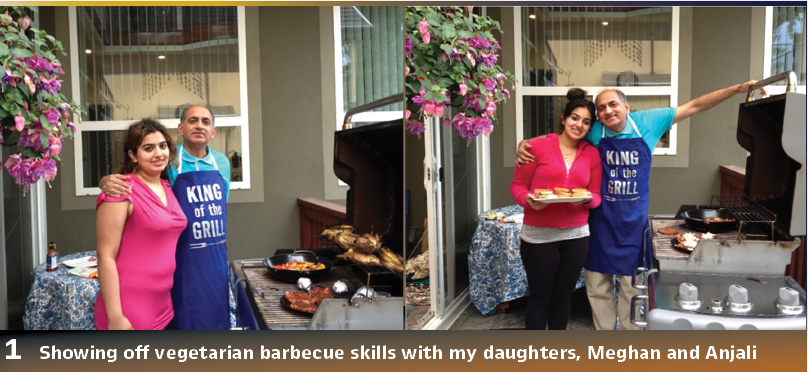
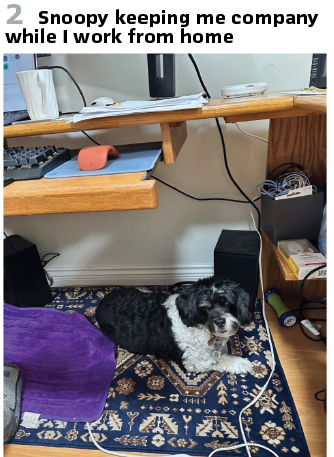
In power system protection engineering, fractions of a second can determine whether a disturbance becomes a minor event or a major blackout. Protection engineers design systems that respond instantly to faults, disconnecting only the affected equipment so the rest of the grid can continue operating safely.
It is a field that demands precision, analytical thinking, and constant attention to detail.
Yet outside of substations, system models, and relay coordination studies, my life is filled with very different activities: tending a flower garden, experimenting with Indian recipes in the kitchen, and taking long daily walks with my dog, Snoopy. At first glance, these hobbies may seem far removed from engineering, but over the years, I have realized that they share many of the same qualities: curiosity, creativity, patience, and problem-solving.
In many ways, these simple pursuits provide balance to my professional life and occasionally even inspire solutions to engineering challenges.
Cooking Born of Care: Ironically, although I now enjoy cooking immensely, I never really learned to cook as a young person.
As a boy growing up in India, my interests were elsewhere. I enjoyed gardening and would plant marigolds and dahlias around our small home. I took pride in caring for them and never missed watering them, even during the intense summer heat when temperatures approached 40°C. Gardening felt natural to me. Cooking, however, did not. It wasn’t until much later, after moving to Canada, that I learned basic cooking simply as a necessity of life.
My real passion for cooking developed unexpectedly during a difficult time in our family. My wife, who passed away on January 6, experienced a prolonged health issue when our daughters were still very young. Because of her health challenges, we spent much more time at home, and our outings became limited. Like many parents, I wanted to keep my daughters cheerful and engaged despite the situation.
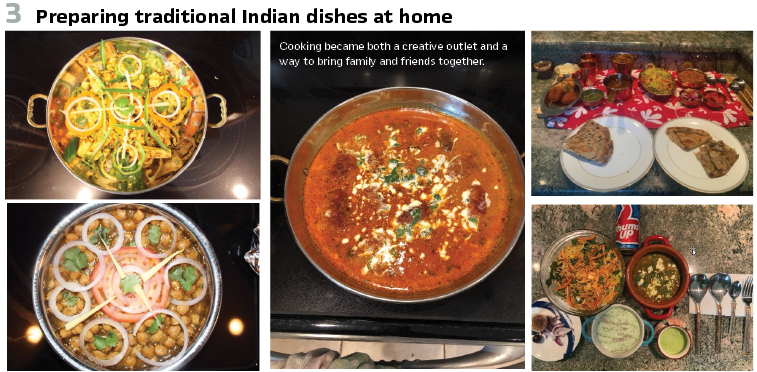
One day, I decided to try cooking something a little more interesting than my usual basic meals. I began experimenting with restaurant-style dishes and new recipes, particularly from East Indian cuisine, filling our kitchen with the aromas of roasted spices, ginger, and fresh herbs. To my surprise, my daughters loved the food. Their enthusiasm was the encouragement I needed to keep experimenting. What started as a small effort to brighten our family life gradually evolved into a genuine passion for cooking.
Even after my wife recovered, the habit remained. Over time, I became the primary cook in our household. My wife then enjoyed helping when we hosted guests, but I was usually the one planning the menu and preparing the dishes.
The Engineering Side of Cooking: Like engineering, cooking quickly became an activity where experimentation and precision matter.
In electrical protection engineering, small adjustments in setting parameters can dramatically alter relay response during faults. Cooking has similar subtleties. The balance of spices, temperature control, timing, and presentation all influence the final result. When I cook Indian cuisine, the process often follows a structured sequence:
- First comes preparation, selecting ingredients and understanding how flavours will interact
- Next is the layering of spices, forming the foundation of the dishes
- Finally comes careful cooking and finishing, where timing becomes critical
The process is not unlike designing a protection scheme: there is planning, execution, and continuous refinement.
One aspect of cooking that fascinated me was achieving vibrant colours naturally. Many traditional Indian dishes use artificial food colouring to create their characteristic appearance. For example, tandoori dishes are often given their bright red colour using artificial dyes.
I have always preferred natural ingredients, but for a long time, I struggled to reproduce that visual effect. The solution came to light during a family trip to Mexico.
While visiting the Mayan pyramids, our tour bus stopped at a restaurant that demonstrated traditional Mayan cooking techniques. I noticed that their dishes had a beautiful natural red colour. Curious, I asked about the ingredient responsible. The answer was annatto seeds. That small discovery changed my approach to cooking. It reminded me that innovation often comes from observing how other cultures solve similar challenges an insight that applies equally well in engineering.
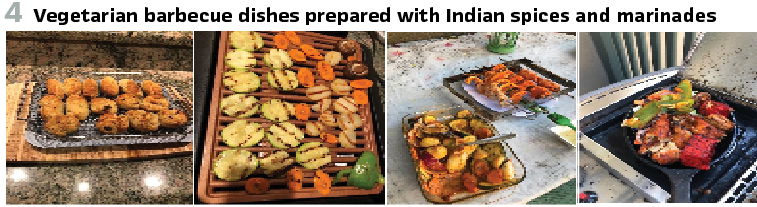
Reinventing the Barbecue: Being a vegetarian presents another interesting culinary challenge.
Traditional barbecue culture is heavily focused on meat. Rather than accept limited options, I decided to experiment with vegetarian barbecue recipes. Over time, I developed several dishes that worked particularly well on the grill.
Vegetables marinated in spices, paneer (Indian cheese) prepared with different seasoning techniques, and grilled vegetable combinations became staples at our gatherings.
These barbecue evenings quickly became popular with our friends, especially families with young children. Good food has a remarkable way of bringing people together, and those evenings often lasted late into the night, filled with laughter and conversation.
Occasionally, my enthusiasm for discussing recipes has also had unintended consequences.
Once, while visiting friends for dinner, the men gathered downstairs to play games while the women prepared dinner upstairs. A friend jokingly suggested that I go upstairs and talk about cooking recipes to keep the conversation going while the game continued. I happily accepted.
Apparently, the discussion about food lasted long enough that when the men eventually came upstairs, they were loudly wondering why dinner had not yet been served.
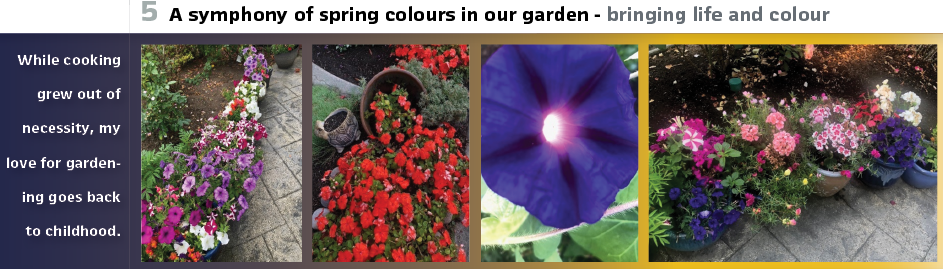
Finding Peace in the Garden: While cooking grew out of necessity, my love for gardening goes back to childhood. Flowers fascinated me even as a young boy. There is something deeply satisfying about nurturing plants and watching them grow. My passion for gardening grew significantly after we built our current home. With more outdoor space, I began experimenting with different flowers and garden designs. I was fortunate to have guidance from a colleague and experienced gardener, Terry Martinich, who shared his knowledge of roses and dahlias. He even gave me dahlia bulbs to plant in our garden. Those early lessons helped me develop the garden into something truly enjoyable.
Then the COVID pandemic arrived.
Like many people during that period, I found myself spending much more time at home. Gardening became an outlet for creativity and a way to maintain a positive routine during uncertain times. Our garden gradually transformed into a colourful landscape filled with roses, dahlias, and marigolds.
My wife particularly loved the marigolds that line the flower beds. She often said they reminded her of the marigold garlands used in Indian celebrations.
Neighbours frequently stop to take photographs of the flowers. Some even ask questions about how we maintain the garden.
Moments like that make the effort worthwhile.
Gardening teaches patience. Plants grow at their own pace, and success requires consistent care rather than quick results.
That philosophy applies remarkably well to engineering, too.
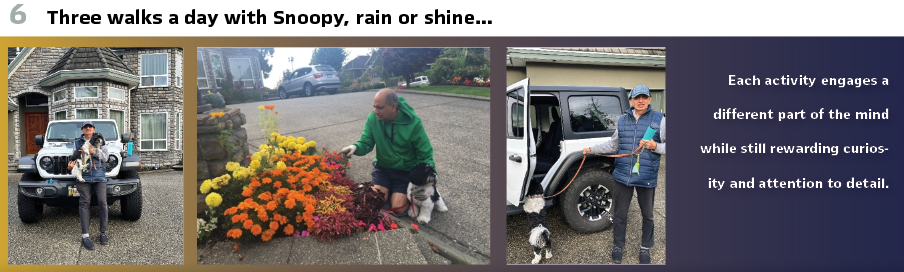
A Dog Named Snoopy: While cooking and gardening are seasonal hobbies, one activity occupies my time year-round: walking with Snoopy.
Snoopy came into our lives through a bit of quiet family strategy.
Growing up in India, I was never comfortable around dogs. Stray dogs were common, and I was bitten once as a child. As a result, I never imagined owning a dog.
My younger daughter, however, had different plans. While living in a university residence, she quietly adopted a puppy but could not keep him there permanently. During spring break, she brought the puppy home and left him with us.
Initially, I was not pleased with this surprise arrangement. But Snoopy had a way of quickly winning hearts. Before long, he became my constant companion-rarely more than a few steps away, always keeping an eye on me.
Today we walk together at least three times a day, regardless of the weather. When I work from home, he sits under my desk. When I garden, he stays nearby, patiently watching. At some point, I even realized that my Jeep is black-and-white, just like Snoopy.
Sometimes life has a quiet sense of humor.
Work, Hobbies, and Unexpected Ideas: One of the most interesting aspects of hobbies is how they sometimes influence professional thinking.
In engineering, complex problems often require creative solutions. While we may spend hours analyzing system models and reviewing technical data, breakthroughs sometimes occur when our minds are relaxed. I have personally experienced this more than once.
On two occasions, solutions to difficult engineering problems related to generator interconnections came to me while I was walking Snoopy or working in the garden.
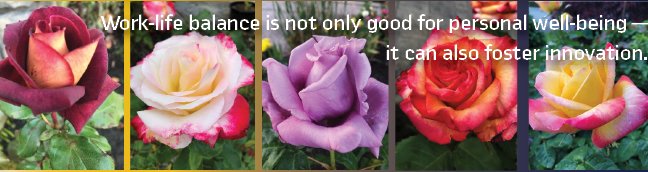
Those moments reinforced an important lesson: work-life balance is not only good for personal well-being-it can also foster innovation.
Stepping away from technical work occasionally allows the mind to process information differently. In many ways, cooking, gardening, and walking provide exactly that mental reset
Creativity, Precision, and Balance: Looking back, I find it interesting how these hobbies mirror aspects of engineering:
- Cooking requires experimentation and precise timing
- Gardening requires patience, planning, and an understanding of natural systems
- Even walking a dog encourages routine and reflection
Each activity engages a different part of the mind while still rewarding curiosity and attention to detail.
Engineering is often viewed as a purely analytical profession, but creativity plays a vital role in solving complex technical problems. My hobbies remind me of that. They also remind me that life is richer when we cultivate interests beyond our professional responsibilities.
A Life in Colour: Whether it is the vibrant colours of a flower garden, the aromas of a carefully prepared meal, or the quiet companionship of a dog on a morning walk, these simple experiences provide balance to a life spent working with complex electrical systems.
In protection engineering, we focus on ensuring that when disturbances occur, the system responds quickly and continues operating safely. In many ways, hobbies play a similar role in life; they restore balance, provide perspective, and help us keep going when challenges arise.
Outside of work, it is the small moments-shared meals, blooming flowers, and daily walks—that bring colour to our own lives. And sometimes, those moments even spark the ideas that help us solve the next engineering challenge.
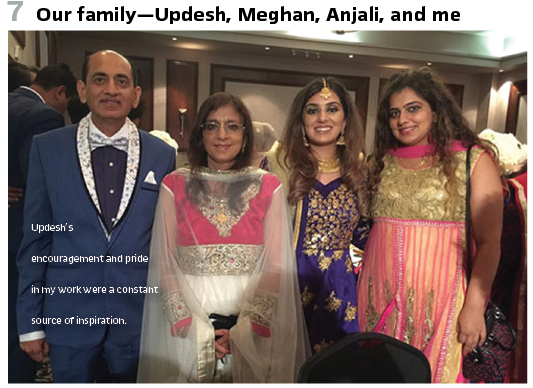
Honouring My Partner: None of these passions, my work, my hobbies, or the balance between them, would have been possible without the support of my wife, Updesh. She was my partner in every sense of the word. She took great pride in my work and was always the first to celebrate every milestone, every award, and every success that came my way. Behind many of those achievements was her quiet encouragement and belief in me.
Updesh passed away on January 6, and her absence is deeply felt in our family. Yet her presence continues to guide me. Whether I am working on an engineering challenge, cooking for friends, or tending to the garden we both loved, I often feel that she is still part of those moments. In many ways, this article is as much a tribute to her as it is a reflection on my hobbies and experiences.
Biography:
Mukesh Nagpal is a Senior Associate Technical Consultant at Burns & McDonnell and an IEEE Fellow. With over 35 years of experience in electric utility research and power system protection, Mukesh has made notable contributions to the economic, safe, and reliable integration of renewables into the electric grid. He has published approximately 50 technical papers.