PAC World: When and where were you born?
M.C.: 1952 Waco, Texas.
PAC World: Where did you grow up and where did you go to school?
M.C.: My pre-elementary school years were in Waco Texas. Our family moved to Fort Worth for grades 1-4 and then back to Waco for the remainder of my public schooling. I graduated from Richfield High School.
PAC World: Did you have any specific interests while in school?
M.C.: My main interest during my school years was having a good time with my friends and sports, particularly basketball. My Dad referred to me as “Good time Charlie.”
PAC World: Can you think of someone or something in your childhood that influenced your decision to become an engineer?
M.C.: My 9th grade algebra teacher, Rudy Garcia, showed me that I was a natural in math. Up until that point, I was only focused on having fun.
PAC World: Where did you go to university and why did you choose that one??
M.C.: I knew that I wanted to study engineering. I was accepted and had dorm reservation at UT, Texas A&M, and Texas Tech. I ended up at Texas Tech partly because it was the farthest one from Waco.
PAC World: Why did you study electrical engineering?
M.C.: I think I picked electrical engineering because I knew I was good at math, and I thought electrical engineering was more math intensive than the other engineering curriculums.
PAC World: Did you study power system protection?
M.C.: I didn’t study it in school; however, I spent 3 summers working at Texas Power and Light (now Oncor) on substation crews and with a relay technician named Joe Broughton. He is one of the smartest most gifted people that I’ve ever known, and the work fascinated me.
PAC World: Did you have any other interests than learning at that time?
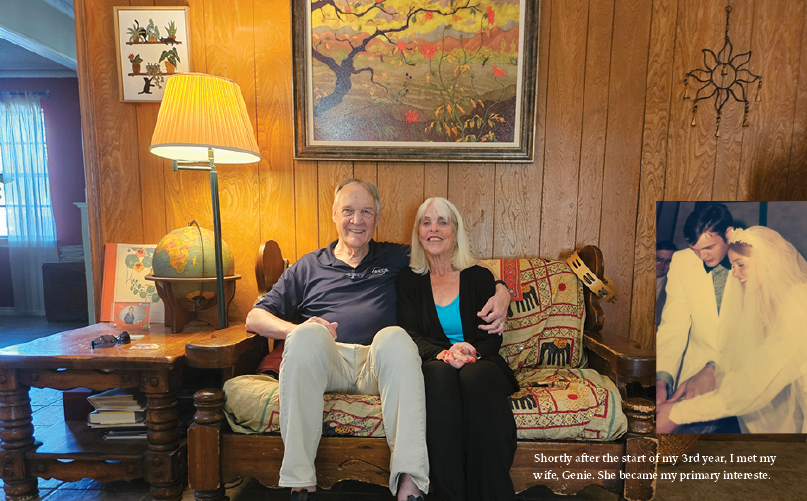
M.C.: For my first couple of years, I lived up to my “Good time Charlie” representation and shortly after the start of my 3rd year, I met my wife, Genie. She became my primary interest.
PAC World: How and where did you start your career?
M.C.: I consider the summer work in Waco really to be the start of my career. The things I learned about people and work have been foundational to my career.
PAC World: Why did you decide to work at a utility?
M.C.: I fell in love with the culture and the work during my 3 summers.
PAC World: What were your responsibilities while you were there?
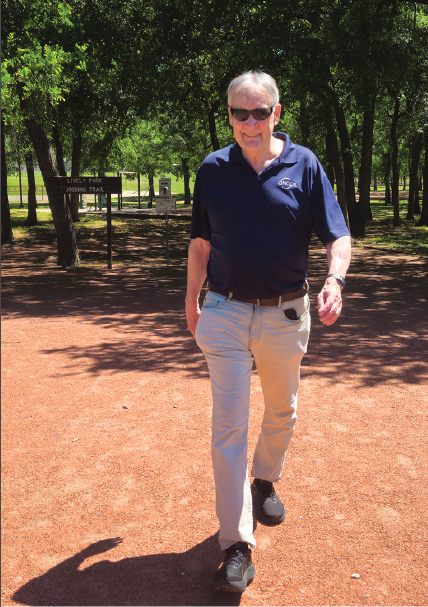
M.C.: I’ve been blessed with multiple opportunities over my career and truly loved almost all of them. Early in my career I moved into supervision and management roles. In my first supervision role, I ran transmission/substation work centers, moved to distribution for a short time, back to transmission work centers, and then to substation engineering in 1987. In 1992 I moved to supervise the system protection group after a short period of uncertainty due to the merger of three utility companies. I stayed there until 2006 when I became Sr Director of Engineering. For the next several years I was VP and CIO or VP and CTO, during which time we deployed the advanced metering system. In 2011, I assumed my current position of Sr VP of Transmission and Distribution Operations.
PAC World: What was the most challenging moment during this period?
M.C.: Because I was the only salary support my wife and five kids, the job uncertainty during the merging of 3 utility companies was the most challenging moment.
PAC World: And what was the most satisfying moment during this period?
M.C.: The most satisfying moment was being selected to lead the system protection organization even though I had never been in that organization.
The knowledge I picked up during my three summers as an intern and my background supervising hands-on relay technicians and substation design personnel gave me the foundation that I needed to become successful.
PAC World: You have been actively involved in IEEE. How did you get involved and what was your role in it?
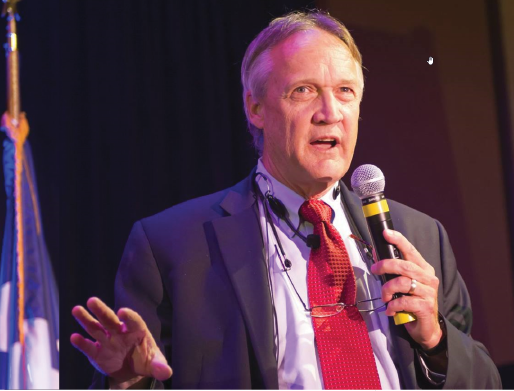
M.C.: In college I was introduced to IEEE and participated somewhat at the chapter level early in my career.
After taking the system protection job, I got very involved in the Power System Relaying Committee and truly loved the people there and the vast opportunity for learning, growth, and development. Some of my specific engagements including chairing the working group that published the IEEE Guide for Protective Relay Application to Transmission Lines and the working group that developed the Protective Relaying Performance Measuring Methodology. This later work became the foundation for the NERC measuring methodology. I also chaired the Line Protection Subcommittee.
PAC World: You have been involved in the transition from electromechanical to microprocessor based protection. What do you think about the ongoing digitization of the electric power grid based on IEC 61850?
M.C.: In the 1990s Oncor began using microprocessor-based relays for new installations. Following the failure of the primary and backup electromechanical relay system failure at a nuclear plant in 2003, we decided to aggressively replace our electromechanical relaying systems with microprocessors relays.
We adopted an exact copy design that has been effectively and efficiently replicated well over one thousand times with very good success.
At that point in time, IEC 61850 was overly complex, lacked maturity, was overly focused on total interoperability, and was applied in various demonstration projects only. At this point, I view IEC 61850 as a viable tool that can be deployed efficiently in system protection designs, especially in light of continued grid complications that are being introduced by distributed generation and substantial penetrations of inverter-based resources.
However, today, at Oncor, we have no need to change or expand our direction.
PAC World: What is your opinion about the centralization and virtualization of protection and control?
M.C.: I’ve always been a strong proponent of the KISS (Keep IT Simple Stupid) principle in system protection and believe that it is a solid principle.
I am comfortable with our collective knowledge over many years in how to integrate discrete relaying systems in ways that have well tested microprocessor relays functions within the relay.
We install these systems in an exact copy repeatable manner.
The broad workforce is trained and has a good understanding as to how to install, operate, and maintain these systems. However, I believe that society and economic pressures combined with grid complexities primarily due to the high levels of inverter-based resources, in some cases, will require some level of centralized overlay of protection and adaptation.
My experience as CIO gave me the knowledge that every software solution that I’ve ever seen has hidden flaws that are not detected in the design or testing phase. Many of them lay dormant for years before they show up. We cannot let that be the situation in protective relaying.
PAC World: Artificial Intelligence is becoming part of our everyday lives. How do you see its impact on the electric power industry?
M.C.: Over my career, I’ve seen many new technological tools evolve, and I view AI as just another step on this evolution, although potentially it may be a big one. For instance, relay designs and settings were done by hand, and then with calculators, and then with short circuit programs. In all cases, as technology evolved, we developed better designs and systems.
Done right, AI will help us to continue to design and operate the grid better than we ever have. Done wrong, AI will make us lazy and complacent, leading to unforced errors. In all cases, I see this as a tool and not a final decision maker on operational or protection tasks.
PAC World: Do you think it is possible to prevent wide area disturbances and blackouts?
M.C.: I believe it is possible to prevent them; however, I think they will continue to occur occasionally. Political and economic decisions are being made that make it unlikely to completely avoid them.
As we continue to have less dispatchable generation, more complex systems, large penetration of inverter-based generation and loads, and as we continue to operate systems “too close to the edge”, it seems inevitable that they will occasionally occur. Unfortunately to many people “a contingency is not credible until after it has occurred.”
PAC World: How do you see the future of our industry?
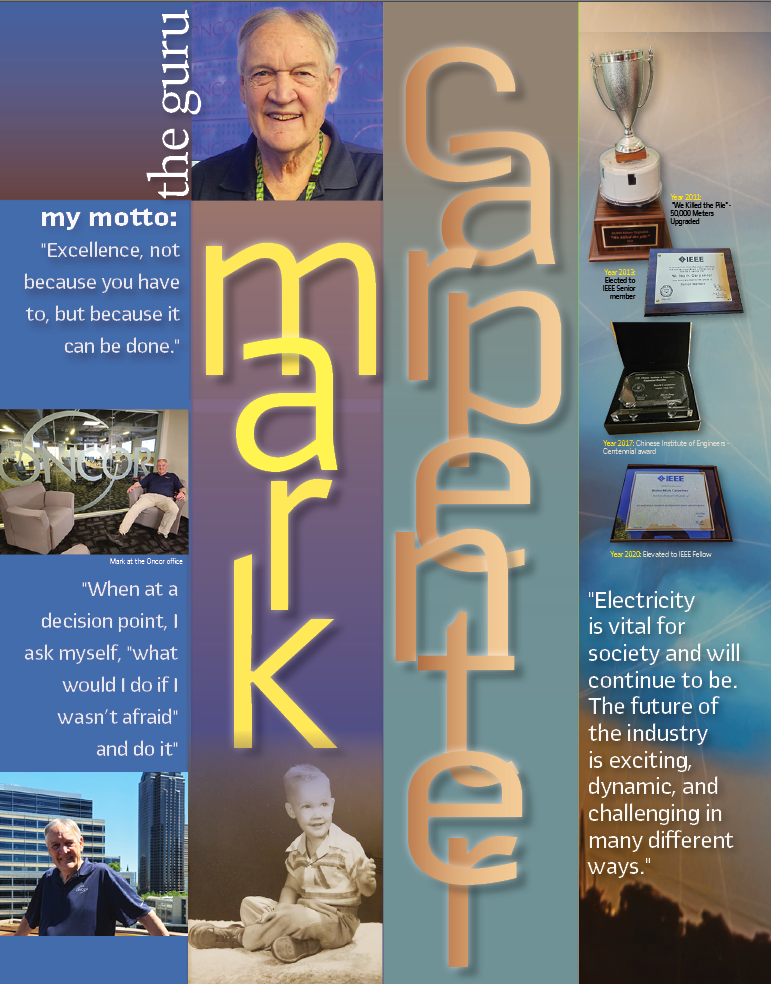
M.C.: Electricity is vital for society and will continue to be. The future of the industry is exciting, dynamic, and challenging in many different ways. Every day there will be new problems to solve and new techniques and tools to solve them.
PAC World: What is the greatest challenge you faced during your professional career?
M.C.: Early in my career, I was out of balance, pressed too hard at work, and experienced some panic attacks. Working through that period and developing a more balanced and centered approach to life has been key to my life’s success.
PAC World: What do you consider your greatest professional achievement?
M.C.: I’ve been involved in many technical and organizational challenges over my career. The key to my success has been raising the bar and developing high performance teams.
My greatest achievement occurred back in 1999 when I convinced our organization that we needed to hire four-year Electrical Engineering graduates (almost exclusively) into our Protection and Control Technician ranks.
Those individuals now fill VP roles, director roles, manager roles, engineering roles, and technician roles. This single pivot continues to payoff many times over.
PAC World: What is your current position?
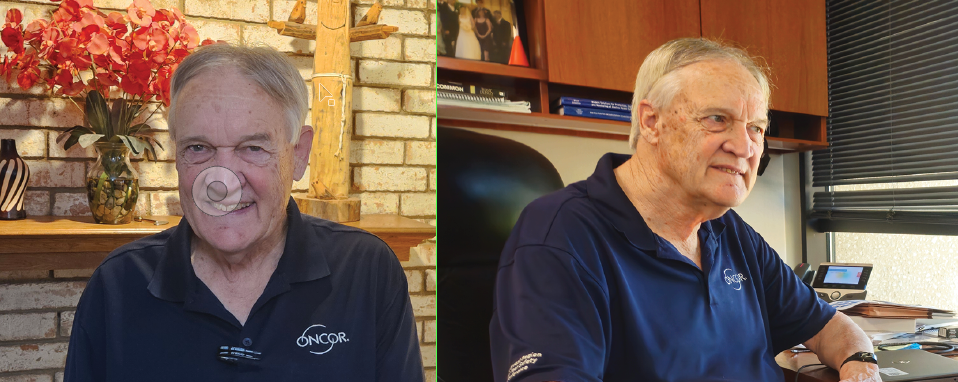
M.C.: I am the Sr Vice President of Transmission and Distribution Operations. In that role I’m responsible for the transmission and distribution operation centers and for the environmental services operation.
PAC World: You have been working for more than 50 years. Do you ever consider retiring?
M.C.: I truly love my work at Oncor, my industry involvement, and all the people I work with. As long as my health and my wife’s health are good, why would I retire? At some point, I may leave Oncor, but I can’t see getting totally out of business.
PAC World: You have received different awards. Which one do you consider the most important to you?
M.C.: Both the IEEE Fellow award and the Leadership in Power award have been very meaningful.
PAC World: How do you balance your active professional life with your family life?
M.C.: Early in my career I was not very good at this. Over time, I got much better. Today I prioritize my time and priorities in a manner that if I were to die tomorrow, I would not have regrets. For me the key is to use time wisely.
If I do that, there is plenty of room for all that is important. My key balance points are spiritual, family, fitness/heath, other people, and work.
PAC World: What do you consider your greatest personal achievement?
M.C.: Genie and I have been married for 51 years and have five kids and eleven grandkids. They are all doing very well in life.
PAC World: What do you like to do when you are not working?
M.C.: I jogged for many years; now I walk several miles a day due to a worn-out knee.
I play golf, volunteer on a couple of non-profit boards, and spend lot of time with Genie and with the grandkids in their sporting activities.
PAC World: You have traveled to different countries. Do you have a favorite place?
M.C.: This world is a big diverse wonderful place, and Genie and I have been blessed to be able to see a good deal of it. There is beauty everywhere, and I don’t think I have a favorite place.
PAC World: Do you have favorite music?
M.C.: Music from the 60s is still great. After being in Lubbock, I also became fond of country and western music.
PAC World: What is your favorite form of entertainment?
M.C.: Sporting events.
PAC World: What is your favorite food?
M.C.: Good food: I’d rather have good food than bad food any old day of the week.
PAC World: Do you have a motto?
M.C.: Three come to mind:
“Excellence, not because you have to, but because it can be done”
“Life is not a dress rehearsal, live it with no regrets”
“Live your life so that you’d be comfortable with it being shown on the front page of the newspaper”
PAC World: Is there anything you would like to say to the young PAC engineers around the world?
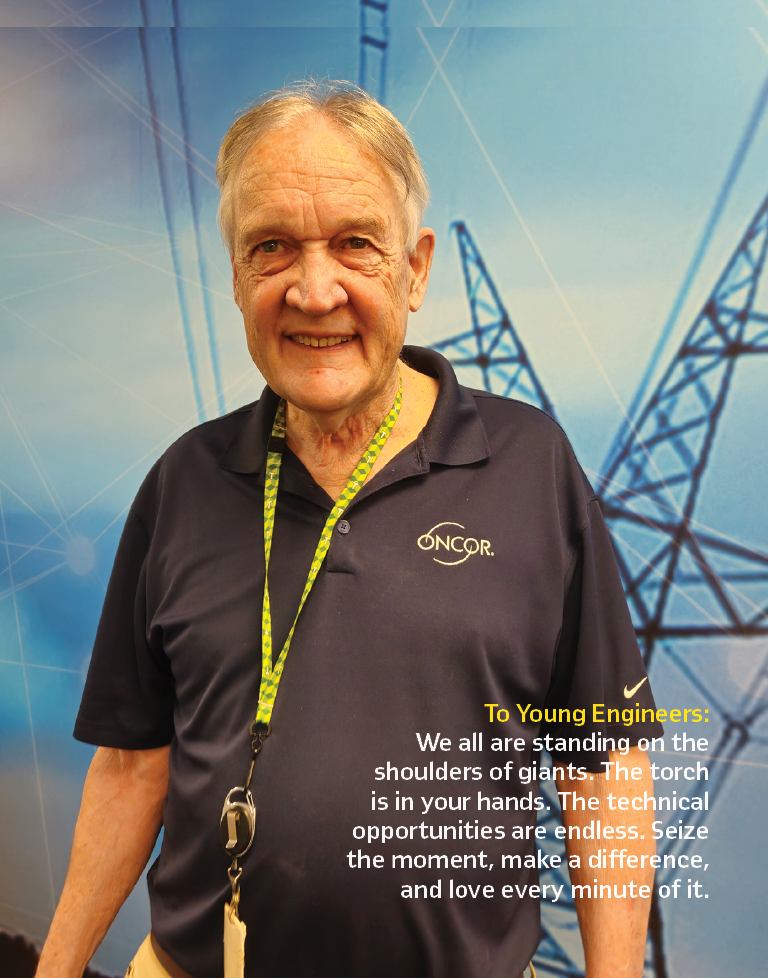
M.C.: We all are standing on the shoulders of giants. The torch is in your hands. The technical opportunities are endless. Seize the moment, make a difference, and love every minute of it.
PAC World: Is there anything that we didn’t ask you that you think can help our readers better understand who you are?
M.C.: When at a decision point, I ask myself, “what would I do if I wasn’t afraid” and do it. (That doesn’t mean take your 401 K and put it all in red).

Biography:
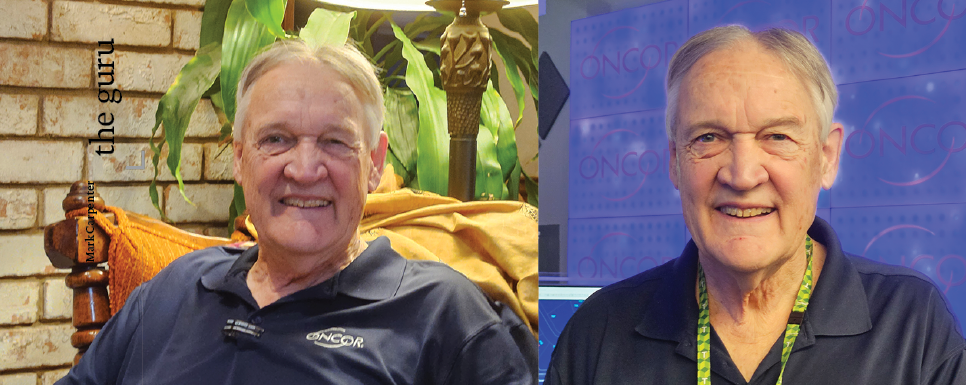
Mark Carpenter is Sr. Vice President of Transmission & Distribution Operations at Oncor where he has spent his entire career. Over Mark’s 54 year career, he has held various field management and engineering management positions in the transmission and distribution of electrical energy. Previous assignments also include Vice President-Chief Information Officer, Vice President-Chief Technology Officer, Director of Engineering, and Director of System Protection. Throughout his career, he has focused on developing people and creating high performance teams. Mark earned a bachelor’s degree in electrical engineering at Texas Tech in 1975 and is active in professional activities. He is an IEEE Fellow, an honorary member of the IEEE Power System Relaying Committee, a member of the IEEE/PES Executive Advisory Council, a member of the Texas Society of Professional Engineers. He is a registered Professional Engineer in the State of Texas and is on the Dean of Engineering Council at Texas Tech. In 2021 he received the IEEE PES Leadership in Power award.