PAC World: When and where were you born?
I.P.de S.: I was born in Sao Jose do Egito (Saint Joseph of Egypt), a small city in the Northeast of Brazil, on December 28th, 1951.
PAC World: Where did you grow up and where did you go to school?
I.P.de S.: Until I turned 15, I lived and went to elementary school at Oliveira Lima School. After that, I finished a vocational lower high school course in commerce at Edson Simões College in my hometown. At 15, I moved to Recife, the capital of Pernambuco, and attended high school at the Marista Catholic College.
PAC World: Did you you have any specific interests while in school?
I.P.de S.: Since childhood, I have been fascinated by technological achievements. I remember collecting newspaper articles about space exploration and science in general.
PAC World: Can you think of someone or something in your childhood that influenced your decision to become an engineer?
I.P.de S.: I owe much of it to my father and mother, who, despite coming from a poor family with limited formal education and resources, managed to move to a larger city so that my brothers, sister, and I could have access to higher education.
PAC World: Where did you go to university and why did you choose that oner?
I.P.de S.: At 18, I enrolled at the Federal University of Pernambuco (UFPE) in Recife because it is a public institution, initially aiming to become a mechanical engineer. Later, I switched to Civil Engineering and eventually graduated in Electrical Engineering in 1973. After graduation, I earned an MBA in Information Systems from the Catholic University of Pernambuco, an MSc in Production Engineering from UFPE, and a DSc in Risk Analysis from the Federal University of Campina Grande.
PAC World: Why did you study electrical engineering?
I.P.de S.: After exploring various engineering fields, I was drawn to electrical engineering because of its emphasis on math and science. Initially, I believed that other engineering disciplines primarily relied on practical, hands-on knowledge. Now I realize they are all similar in these aspects
PAC World: Did you study power system protection?
I.P.de S.: Like many other universities, protection engineering was rarely included in electrical curricula. This was the case during my graduation. I learned about protection after graduation, after enrolling as an engineer at a local utility
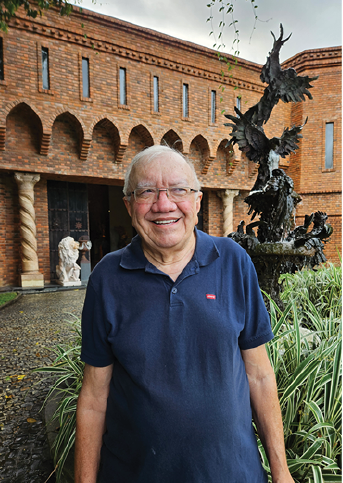
PAC World: Did you have any other interests other than learning at that time?
I.P.de S.: At 16, my first job was as a maintenance team member at a local car dealership, which sparked my initial interest in mechanical engineering. During college, I also worked as a trainee at the local IBM office, where I programmed in COBOL, and later as a mainframe operator for a federal agency in Recife.
These experiences fueled my interest in information technology and led me to transition into the field of electricity.
PAC World: How and where did you start your career?
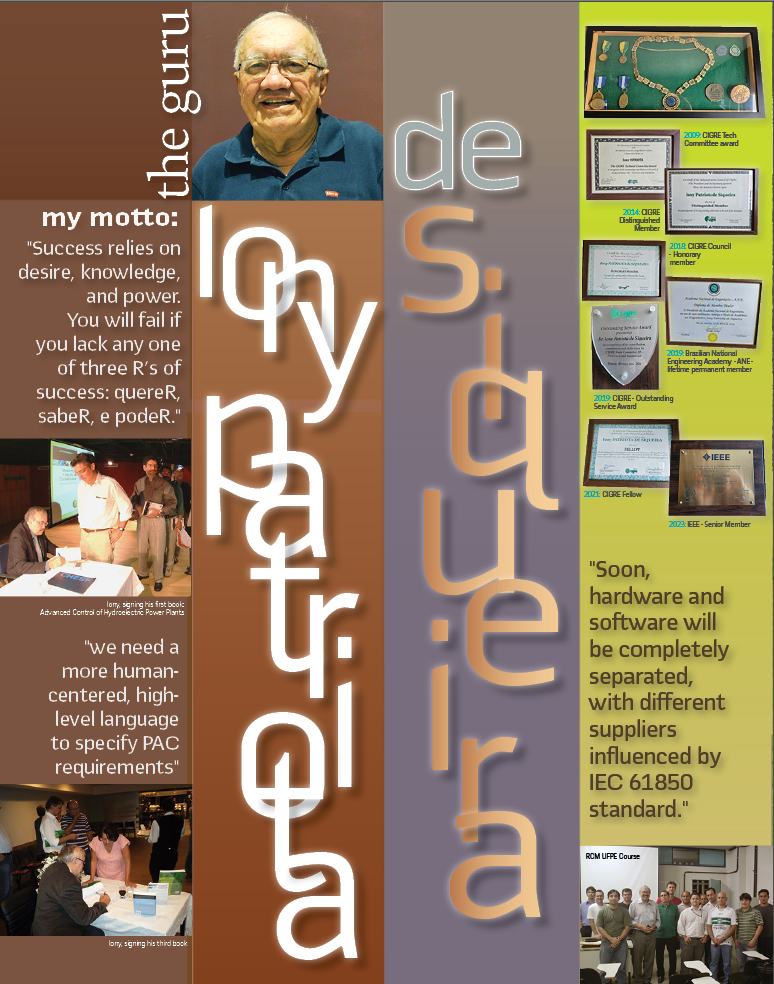
I.P.de S.: Two years before graduation, I joined CHESF (Hydro Electric Company of the San Francisco River) as an engineering trainee, initially working on hydroelectric power plant maintenance and later as a protection and automation engineer after graduation. This became the subject of my book on “Advanced Control of Hydroelectric Power Plants,” published by Amazon.

PAC World: What were your responsibilities while you were there?
I.P.de S.: My main responsibilities initially included maintaining and testing protection and metering systems. Later, I became a team leader and eventually a manager of protection and automation for the company, holding that role for nearly 40 years.
PAC World: Why did you decide to continue your education while working at the same time?
I.P.de S.: Coming from a low-income family, I had had to work since high school. I decided to pursue an MBA in information systems because of my role as a manager and my experience at IBM. My interest in teaching led me to enroll in an MSc program and later a PhD program at different universities and in different cities.
PAC World: What was the most challenging moment during this period?
I.P.de S.: All my post-graduate programs were completed independently, with no company support. The main challenge was balancing evening classes with my day job as a manager and the constant travel demands. Sometimes I had to postpone classes due to work travel, which delayed my graduation
PAC World: And what was the most satisfying moment during this period?
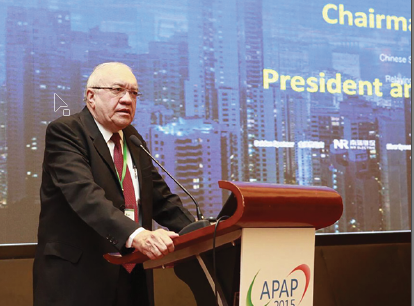
I.P.de S.: My master’s Thesis was approved with honors, and my advisor’s personal evaluation stated it was at the doctoral level. Later, my Doctoral Thesis received the Brazilian Engineering Award, recognizing it as the best PhD thesis in Energy in 2011. These were my most rewarding moments during this period.
PAC World: In 1991 you started your own company and worked in it while still working for ELETROBRAS CHESF. How did you manage that?
I.P.de S.: While working at CHESF, my company, Tecnix, was operated by my wife, who served as a partner and administrative director. My responsibilities included providing short training courses in the evenings and during vacations. At that time, it was possible to divide vacations into smaller segments so I could travel for consulting and teaching and attend CIGRE events. The internet also allowed me to deliver courses across the country, mainly in the evenings.
PAC World: You obtained a PhD degree in 2010 – more than 30 years after your BSc degree. What made you do that?
I.P.de S.: Coming from a poor family, I had to work and couldn’t go straight from graduation to postgraduate studies. My late MSc and PhD degrees were driven by recurring problems I faced at work. The first problem was the need, as a manager, to optimize maintenance schedules for protection systems at CHESF, and the second was the necessity to assess the risk of major blackouts in power systems, considering the roles of protection and automation systems.
PAC World: You have been actively involved in CIGRE and CIGRE Brazil. How did it happen and what was and is your role in it?
I.P.de S.: Since beginning my professional career, I have utilized many CIGRE and IEEE publications available in the company’s library. The opportunity to participate in CIGRE activities arose after I was asked to lead the CIGRE National Automation Symposium (SIMPASE), organized by CHESF. Since then, I have been a member of the CIGRE Study Committee B5 (Protection and Automation) and have actively contributed to its work. I served as the Secretary of SC B5 for four years and was elected its Chair for two consecutive terms. After my last term, I was elected Vice President and Technical Director of CIGRE-Brazil. Currently, I am a member of the Board of Directors of CIGRE-Brazil, a Strategic Advisor to SC B5 and SC D2, and the convenor of WG B5 88 on “Implementation Guide for fully digital IEC 61850-based Protection, Automation and Control Systems.”
PAC World: You have witnessed the transition from electromechanical to microprocessor-based protection. What do you think about the ongoing digitization of the electric power grid based on IEC 61850?
I.P.de S.: In my view, IEC 61850 is the main factor driving the transition of the power system toward a software-based smart network. Soon, hardware and software will be completely separated, with different suppliers influenced by this standard. However, I think it is time for an additional crucial step toward fully automating the electric grid. Compared to how programming languages have developed, I see current PAC technologies like IEC 61850, IEC 61113, and IEC 61499 as similar to assembly languages used in computers. Although they are advanced and object-oriented, they are still closer to hardware than to the user. Like developers of future PAC systems, we need a more human-centered, high-level language to specify PAC requirements. These requirements could then be translated into low-level languages such as IEC 61850, IEC 61131, and IEC 61499 through compilers and interpreters, as is common in software development. CIGRE has started this effort by publishing brochure 926 “Methods for Specification of Functional Requirements of Protection, Automation, and Control,” which I had the honor to lead in WG B5.64.
PAC World: What is your opinion about the centralization and virtualization of protection and control?
I.P.de S.: Centralization and virtualization naturally emerge from advances in hardware and software. The first results from having enough computing power to handle all required algorithms for full automation. The second stems from the flexibility of modern software technologies, which make it easier to distribute or combine multiple functions across different processing platforms. Cost savings encourage gradual adoption of these technologies. Concerns about relying on a single centralized system can be addressed by replicating resources locally. Ultimately, this development may lead to complete decentralization, potentially extending beyond the substation into the cloud.

PAC World: Artificial Intelligence is becoming part of our everyday lives. How do you see its impact on the electric power industry?
I.P.de S.: The electric power network is considered the most complex human-made machine. As a result, it is one of the most challenging fields for intelligent decision-making, surpassing the comprehension and processing abilities of individuals or organizations. AI offers a promising solution for managing this complexity because it can quickly access nearly all available knowledge and resources on the web. Many new experiences are being documented as they are employed across every stage of the electric power industry’s lifecycle.
Of particular interest is AI’s role as a support tool for operators in the real-time control room. For PAC engineers, AI is already used as intelligent agents specializing in IEC 61850 and network engineering.
PAC World: Do you think it is possible to prevent wide area disturbances and blackouts?
I.P.de S.: Wide-area disturbances and blackouts occur because of the network’s high complexity and broad exposure to natural and intentional uncontrolled events, such as cyberattacks. Although it is nearly impossible to completely prevent them, their frequency and impact can be minimized through smart planning of countermeasures. Using advanced technologies, primarily AI-based, combined with geospatial intelligence and real-time data, can reduce their effects by enabling early warning systems and better real-time decision-making.
PAC World: What did you find to be the best way to share your experience?
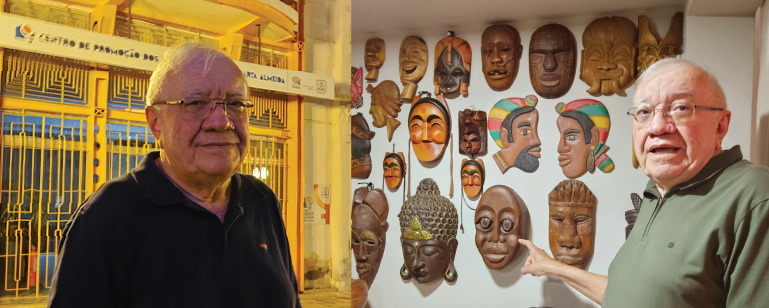
I.P.de S.: I enjoy sharing my experiences through writing books and papers, presenting them at conferences, and participating in working groups. I have authored four books and edited 17 for CIGRE and CIGRE-Brazil. As an instructor in many courses offered by my company and through my experience as a university instructor and invited postgraduate lecturer at three Brazilian universities, I see a need to change how knowledge is shared in universities.
Nearly instant access to information on the web and the ability to attend courses and events remotely are transforming how young people view continuous face-to-face education, reducing their interest in formal education. Clearly, there is a need for a review of how formal education will be delivered in the future.
PAC World: How do you see the future of our industry?
I.P.de S.: The ongoing development of distributed resources, driven by new power sources and energy storage technologies, is encouraging consumers to generate their own energy. This will lead to greater autonomy and independence from the grid.
Although it makes the network more complex, less controllable, and less observable, it will ultimately reduce construction and operational costs, lessen the impact of extreme events and blackouts, and enhance reliability. New operational tools are needed to address this trend, potentially based on stochastic and economic data and signals. The demand for advanced PAC solutions will continue to increase.
PAC World: What is the greatest challenge you faced during your professional career?
I.P.de S.: My greatest challenge was pursuing higher education while working. Attending an MBA, MSc, and PhD, mainly in the evenings and on weekends, was my greatest personal challenge.
PAC World: What do you consider your greatest professional achievement
I.P.de S.: My PhD thesis was selected as the best in Electrical Engineering in 2011, following evaluation by several Brazilian universities, which motivated its publication as a book.

PAC World: You have received many different awards and recognitions. Which one is the most important to you?
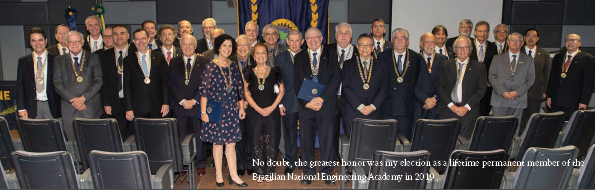
I.P.de S.: No doubt, the greatest honor was my election as a lifetime permanent member of the Brazilian National Engineering Academy in 2019. Being recognized by CIGRE as an Honorary, Distinguished, and Fellow Member is also meaningful to me.
PAC World: How do you balance your active professional life with your family life?
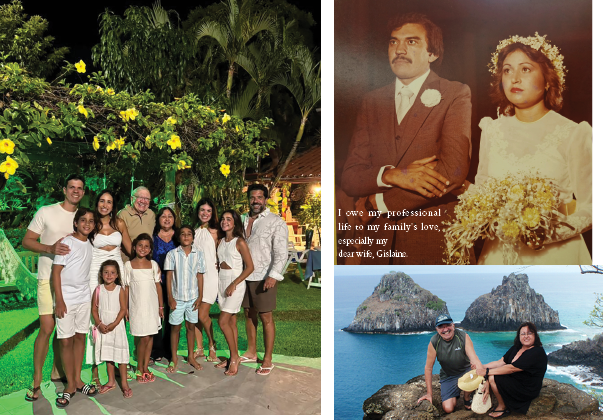
I.P.de S.: I owe my professional life to my family’s love, especially my dear wife, Gislaine. Since our marriage, she has been my steady partner and motivator in everything I do, including managing my consulting business and caring for our home. Together, we have two daughters, their spouses, and five grandchildren, who continually inspire me.
PAC World: What do you consider your greatest personal achievement
I.P.de S.: Building a family, giving them a complete education, and instilling the right values. It is rewarding to see these values being passed down and reflected in my grandchildren’s education.
PAC World: What do you like to do when you are not working?
I.P.de S.: Living in a tropical climate near the sea has always attracted me to the beach. On weekends, we often visit our summer apartment at a beautiful beach nearby, where my daughters also have houses, to spend time together. I enjoy taking long barefoot walks in the sand with my wife. However, being addicted to work, I also have an office in my beach house where I work remotely.
PAC World: You have traveled to different countries. Do you have a favorite place?
I.P.de S.: When I travel, I enjoy visiting thematic museums, large bookstores, and attending theater and musical performances whenever I can. That’s why London is my favorite city, as it offers many opportunities. Although large bookstores are rare, I go to the local university bookstores, where it’s easier to find new books.
PAC World: Do you have favorite music?
I.P.de S.: I enjoy listening to classical pop music. My preferences are Brazilian songs, mainly country music from the Northeast. Frank Sinatra was my favorite international singer.

PAC World: Your favorite form of entertainment?
I.P.de S.: Reading is my favorite way to spend my free time. I have a large personal library of over 3,000 books at home. I’m hooked on printed books. My wife says I often buy more books than I can read.
PAC World: What is your favorite food?
I.P.de S.: I have very simple eating habits. Usually, I just eat meat or fish with rice, beans, fresh vegetables, and of course, Italian food.
PAC World: Do you have a motto?
I.P.de S.: Success relies on desire, knowledge, and power. If you lack any one of these, you will fail. (In Portuguese, I call it the three R‘s of success: quereR, sabeR, e podeR).
PAC World: Would you like to say anything to the young PAC engineers around the world?
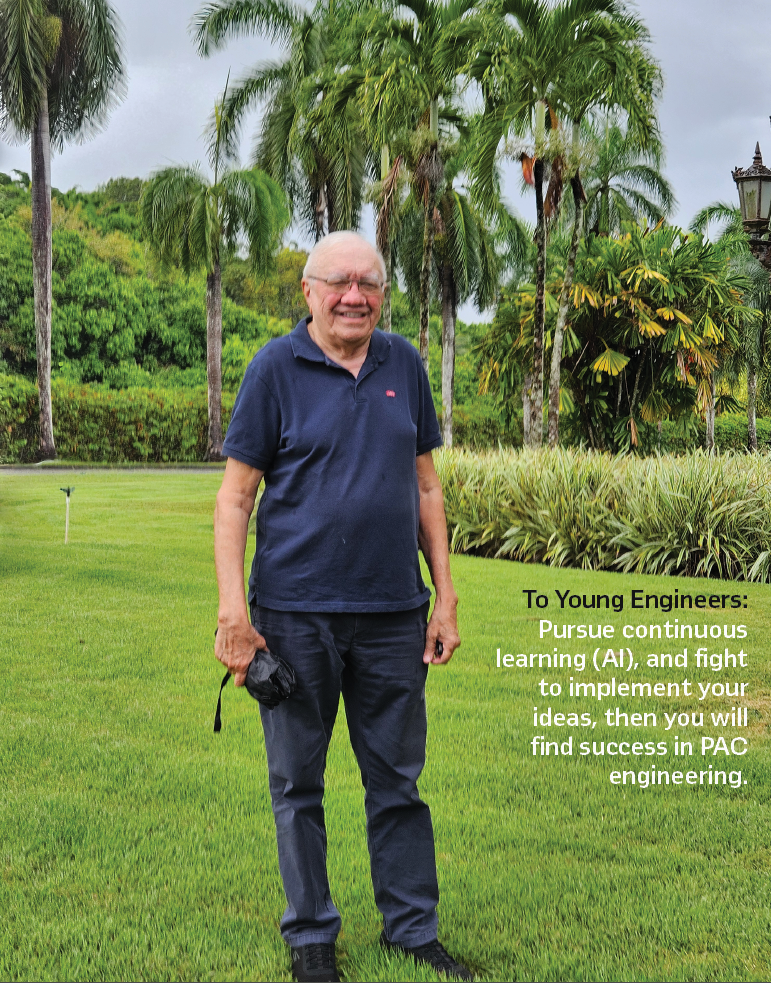
S-J.L.: PAC engineering stands as one of the most challenging and rewarding fields for young people. As our society continuously evolves and responsibilities increase, it offers many opportunities for young individuals to achieve professional success, especially in the AI era. I believe my motto above acts as a guide for them. If you want to become a PAC engineer, pursue continuous learning (AI), and fight to implement your ideas, then you will find success in PAC engineering.
Biographies.
Iony Patriota de Siqueira, holds a PhD (Brazilian Award), a BSc in Electrical Engineering, an MSc with honors in Operational Research, and an MBA in Information Systems. He is an IEEE Senior Member, CIGRE Fellow, Honorary Member, Distinguished Member, and former Chair of Study Committee B5 of CIGRE. With over 40 years of experience in the electrical sector, he has authored four books and co-edited and co-authored the SPRINGER-CIGRE Green Book on “Electricity Supply Systems of the Future,” which was translated into Chinese. He has led the CIGRE working groups B5.32, B5.64, B5.88, and TF B5.01. He is a permanent member of the Brazilian National Academy of Engineering, serving on its Advisory Board and Energy Committee; president of Tecnix Engineering and Architecture; former Technical Director and VP of CIGRE-Brazil; and currently serves on the Board of Directors of CIGRE-Brazil.
.