PAC World: When and where were you born?
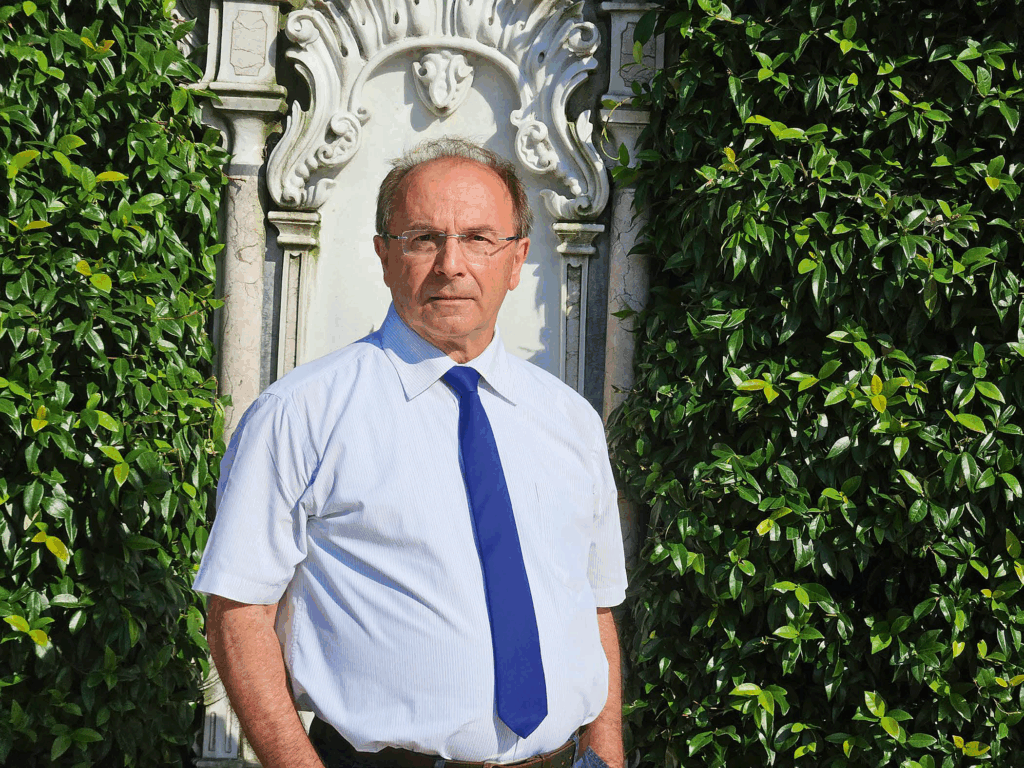
O.U.: I was born in 1959 in Trabzon, which is a major city on the Black Sea cost of northeastern part of Turkiye. Founded in 756 BC, it serves as a vital trade gateway on the historic Silk Road. Today, it is famed for its lush green mountains, rich culture and iconic landmarks. It is also known for passionate football culture, traditional folk dances and Black Sea music.
PAC World: Where did you grow up and where did you go to school?
O.U.: I grew up in Trabzon and lived there until I was 19. I completed my primary, secondary and high school there. I attended primary school in a very green village with many rainy days. I remember on rainy days when the roads were muddy, we would wash our shoes in a nearby stream before entering the school. I also remember swimming in a lake in the summer located just below the primary school. After primary school, I moved to city center to attend secondary school and later on, one of the top high schools, Trabzon Lisesi.
PAC World: Did you have any specific interests while in school?
During my school years, my interests outside of the school were travelling and playing football. Football holds a very special place in my city, regardless of age; everyone is a passionate spectator or football player. In addition, I had to help my family, who locally ran a small-scale textile business.
In the classroom, my special interests were mathematics and natural sciences. Throughout primary, secondary and high school, I was one of the top students in the class in mathematics and natural sciences. When I graduated from secondary school, I was given a supplementary document in addition to my diploma. It stated that I possessed the knowledge and skills to handle the most rigorous mathematics and science curricula. I consider that this was my first valuable award, which encouraged me to turn toward science and technology. I wish I had a copy of that document right now.
PAC World: Can you think of someone or something in your childhood that influenced your decision to become an engineer?
O.U.: Firstly, the document I mentioned earlier steered me toward the field of science and technology. Secondly, most of the people in our community were working in technical related fields such as construction, small shipbuilding, blacksmithing, mechanics, carpentry, textile and others. These people’s manual skills, mindsets, knowledge and abilities, and their approach to the technical fields may have influenced me.
PAC World: Where did you go to university and why did you choose it?
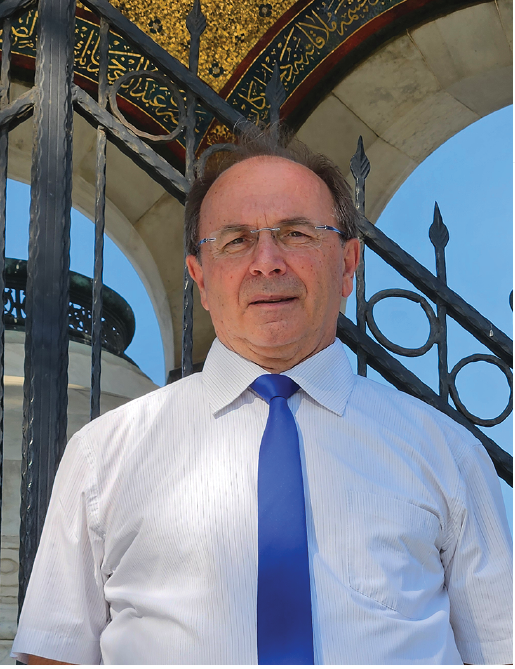
O.U.: After graduating from high school, I had to pass a nation-wide exam to enter the University. Then I chose Istanbul Technical University (ITU), and I moved to Istanbul to start electrical engineering education. ITU is the top state engineering University in Turkiye, and Istanbul is the industrial and technical capital of the country. ITU is the world’s third-oldest technical university founded in 1773 and dedicated to engineering and natural sciences and has a long and distinguished history. It was an imperial school of Naval Engineering, later became Imperial School of Military Engineering, converted into General Engineering School and was finally named as the Istanbul Technical University.
PAC World: Why did you decide to study electrical engineering?
O.U.: In our village there was a river running through a deep green forest. Alongside that river there was a watermill, which was used to produce corn or wheat flour, and was operated by my grandfather. Underneath the mill there was a fixed millstone and above that there was another stone which was rotated by the waterpower. Water coming from the millrace ran from a certain height onto the mill wheel, causing a rotation of the upper stone and grinding flour. It was the first time I was able to go to the library to do some research about the operation of watermills and the relation between a watermill and a hydraulic power generation. I consider this was my first initiation to mechanical and electrical engineering. I did prefer electrical engineering to stay close to computer engineering.
PAC World: Why did you decide to continue your education in the UK?
O.U.: After graduating from ITU, I had to make a decision about going into industry or continuing to study at the university. Sometime later I became a research assistant in the electrical engineering department at ITU. After obtaining my MSc degree, I decided to study for a PhD abroad, within a different society. After gaining my scholarship, I was given permission from the University to go to the UK to pursue a PhD.
PAC World: Why did you select the University of Bath?
O.U.: At the beginning, I had acceptances from some universities from the UK and the USA. Then, we decided to choose for my studies the areas where the fields of electrical engineering would have future needs. I chose the University of Bath to study development of computer-based protection systems. The University of Bath is one of top Universities in the UK, and we had a good relationship with the related industry throughout my PhD studies. After obtaining my PhD degree, I went back to ITU.
PAC World: Did you have any other interests other than learning while at university?
O.U.: At that time, we spent a significant portion of time in class with a lot of course credits. After class, we would work on our project and assignment. We had limited time for other activities. Nevertheless, the neighborhood where we lived was home to some of Istanbul’s best cinemas and theaters. Going to the cinema and theater was among our main activities. Additionally, traveling and playing football were the other main ones.
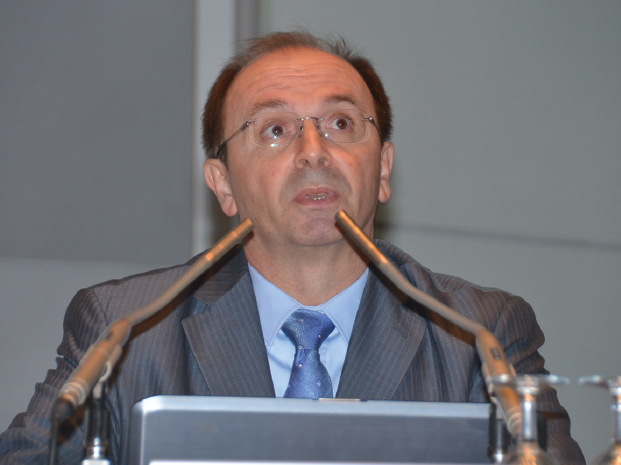
In the UK, in addition to studying and doing research at the university, industrial relationship was an important part of our work. Submitting papers to different conferences around the world and travelling there to present papers was one of our most important tasks. Nevertheless, I had enough time to visit important places around the UK.
PAC World: What made you go back to Turkey after you graduated?
O.U.: I was a research assistant while I was in the UK for my PhD studies. Instead of resigning, I went by taking a leave of absence for a certain period. Following my PhD graduation, I had to rejoint ITU according to an agreement between ITU and myself. Otherwise, I would have had to resign and pay back.
PAC World: Is there any specific reason you chose an academic career?
O.U.: I did not have any specific reason to choose an academic carrier. When I graduated from ITU, I was undecided for a while whether to join the industry or stay at the university and continue studying. I ultimately decided to continue at the university. Immediately after obtaining my PhD degree, I experienced the same indecision; going into the industry for a period of time and then moving to the university or directly going to the university. I chose the second option. Sometimes after joining the university, I started a very good relationship between the University and the Industry about power system monitoring, protection and automation.
PAC World: You spent more than thirty years teaching at the Istanbul Technical University (ITU). Do you see any difference in the students in the 1990s and today?
O.U.: I consider that there is not much difference and that students are actually students. However, today’s students are very fortunate in terms of facilities and infrastructure. Students in the 1990s mainly used physical equipment, analog tools, handwriting notes, a physical library & textbooks, a limited amount of computers, and had a curriculum with many courses. Today’s students have advanced computers, smartphones, and different types of application software, internet facilities, AI and accredited curriculum. They can use their time very efficiently, since they have their works done for them. An advanced digital world is available for them. They should be more productive.
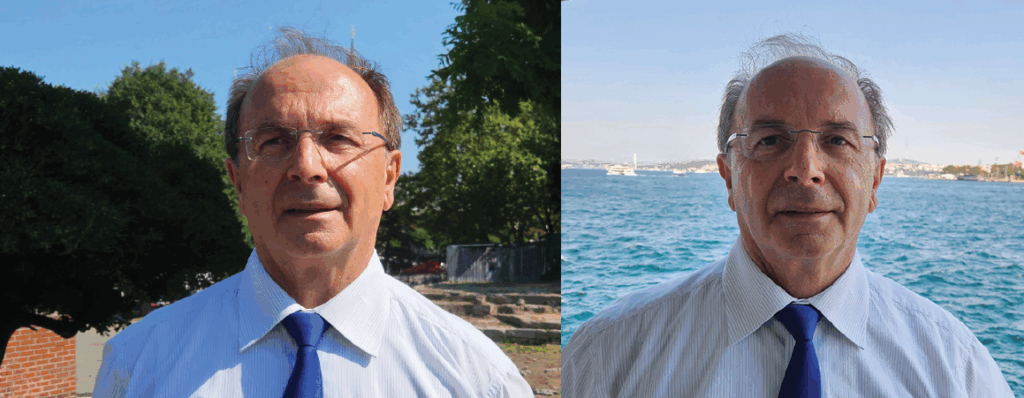
PAC World: You have been involved in teaching and research on a wide range of topics related to power system protection and control. How do you explain your interest in that, and do you have a favorite?
O.U.: In addition to my administrative duties, education and research are core responsibilities for academics. Furthermore, developing new technologies and designing new products in line with social need are a task we undertake in partnership with the industry. Every stage of all these tasks has its own unique interest and excitement. I believe that teaching, researching and technology development in the area of power system monitoring, protection and automation is the most interesting inter disciplinary area including electric power, computer, electronics and communications. I consider this to be my favorite.
PAC World: You have also performed administrative roles at your university. Why?
O.U.: Administrative roles at the university began alongside ABET accreditation efforts of engineering programs that we initiated in the late 1990s at ITU. Firstly, I was the Vice Dean for Academic Affairs, then the head of the electrical engineering department, and finally, Dean of the Faculty. A lot of time, you need to do all of this. Success in administrative roles directly depends on your team and the time that you have dedicated. At the beginning, there was no particular reason to involve an administrative role.
PAC World: This year you moved to MEF University, also in Istanbul. Why?
O.U.: In Turkiye, you are required to retire from the state university at the age of 67. After retirement, I decided to continue my academic carrier at MEF University in Istanbul in early 2026. It was founded by professors who left ITU and has all the engineering programs accredited by the ABET. It is a boutique university specializing in engineering and social sciences, and it embodies the ITU school of thought in engineering.
PAC World: What do you think about the evolution of protection from electromechanical to solid-state and microprocessor relays compared to IEC 61850 based and digital substations?
O.U.: Transition from electromechanical relays to microprocessor-based relays was a crucial development in power system protection. These relays are programmable; include multi-protection functions, and offering monitoring, operation control, recording and self-diagnostic capabilities. They also have a limited communications facility using industrial communications protocols. However, just like a mechanical relay, a digital relay is able to receive power system data from a point and produce decision for that point.
After the development of IEC 61850 communications protocol and process bus communications, measured values, state changes and any decision made can be transferred from any point of a power system to the other points within less than 10ms. This puts the power monitoring, protection, control and substation automation together. Thus, any relay in the by level or any computer in the station level are able to receive sampled values, any state change and decision made from any point of the power network. This initiated the full automation of power systems.
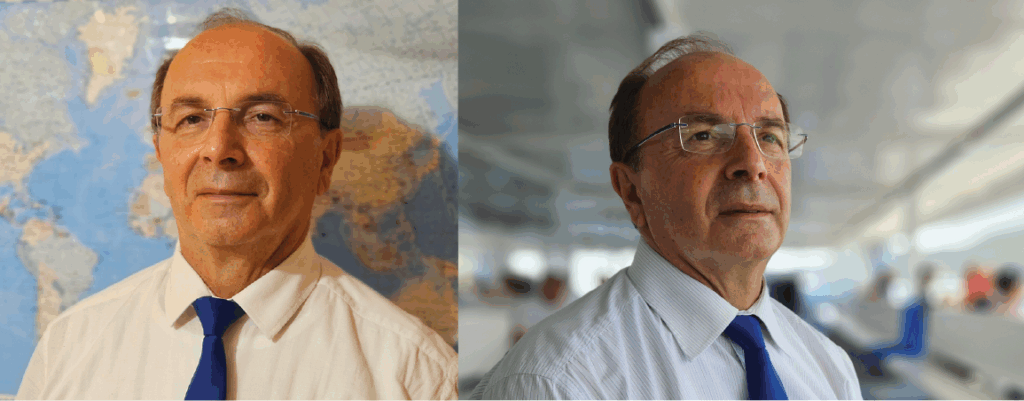
PAC World: You have been involved as an organizer or participant in many conferences around the world. What do you think is the role of these conferences in our industry and why is it important for practicing engineers to participate in them?
O.U.: I consider that researchers and technology developers generally prefer to present the results of their new developments at the conferences to introduce their works and want to see the first response of the attendees. In addition, these conferences support research and practicing engineers in enhancing their knowledge and skills, exploring new technologies and advancing their carriers. This helps to drive the development of our industry by enabling new and fast-growing knowledge exchange within the frame of direct collaboration.
PAC World: You have been actively involved in IEEE. How do you see its role in our industry?
O.U.: I have been with IEEE since 1991 and am involved with many activities around the world since then. I consider IEEE has many roles in our academic and engineering carrier and in today’s advanced industry as well. IEEE organizes and sponsors over 2000 conferences and technical events each year across more than 100 countries linking industry leaders with academia.
IEEE produces most of the industrial standards and technical literature and publishes thousands of papers in the field of electrical and computer engineering. I consider it to be a driving force of technological developments and the global industry.
PAC World: What do you think is the impact of IEC 61850 on the future of protection and control?
O.U.: As I mentioned before, a control center or a relay can take data, decisions made and state change information from any point of power systems using IEC 61850 communications facility. This initiates interaction between protection systems, between control systems, and between control and protection systems. This leads to a consideration of centralized protection and control concept and others. Development based on computer technology and IEC 61850 based data transfers will lead to full- automated power systems together with artificial intelligence. This means that a very limited number of power outages and interruption time will occur.
PAC World: What is the greatest challenge you faced during your professional career?
O.U.: Before my professional carrier began, the biggest challenge I faced was while preparing for and taking the nationwide university entrance exam. In this exam, where half a million students competed, you had to rank within the top 5,000 to get into the engineering program that I wanted.
High expectations, time management, fear of failure and the resulting mental stress were the main reasons of my greatest challenge.
PAC World: What do you consider your greatest professional achievement?
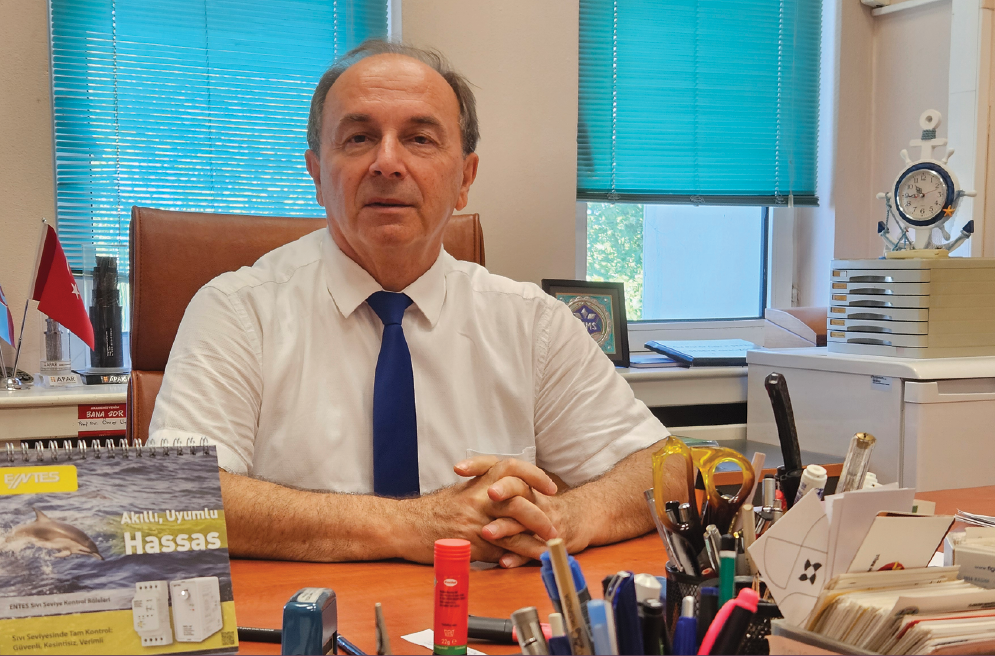
O.U.: I believe I have achieved many significant achievements during the time between my high school graduation and my retirement from state university. The most significant one was to build a bridge between the university and the industry. While conducting education and research at the university, I have been engaged in developing technology and designing new products for industry. I have been an industrial consultant to some companies. I have been an industrial consultant to ENTES Electronic for about more than 25 years to design and produce microprocessor-based devices for power system measurement, monitoring, protection and control.
PAC World: You have received many awards. Which one do you consider the most important to you?
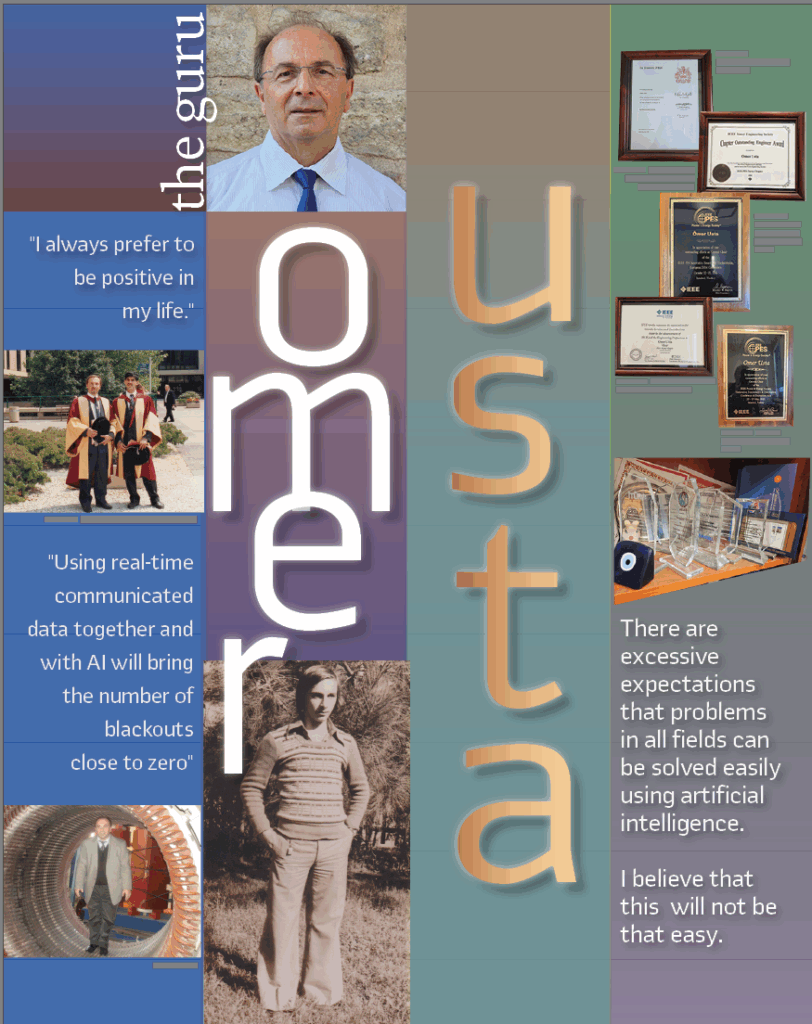
O.U.: I have received many awards throughout my professional life. These are for my contributions and notable services to engineering education, the accreditation of engineering programs, industrial developments, IEEE and others. However, I consider that the most important award that was given to me was the grant to go abroad to study for a PhD in a different society. This was my first step to becoming international. Then I went gradually.
PAC World: Do you believe that we are going to see artificial intelligence applications in power system protection and control in the future?
O.U.: These days, there are excessive expectations that problems in all fields can be solved easily using artificial intelligence. I don’t believe that it will be that easy. As electrical grids have grown and become more complex, new tools have been developed to operate and manage the grid, such as digital computers, data & information exchange. As a general approach, we are using mathematical modelling to represent and estimate power system behavior under operating conditions. Then we are using these to develop protection and control systems. I believe that AI can be used as a tool in the situation where mathematical modelling falls short. We will have many AI applications in power system monitoring, protection, control and management. These would be: fault & anomaly detection and diagnosis, visualization, decision making using vast amounts of local & transferred data, integrated protection and control, physical & cyber security.
PAC World: Do you think it is possible to prevent wide area disturbances and blackouts?
O.U.: Due to the lack of using full computer technology, real-time data and information transfer, we had many wide area disturbances and blackouts throughout the world. Today wide area disturbances and blackouts can be significantly reduced, and in general, many cases have been prevented from cascading, using advanced computer based and communications supported monitoring, protection and control system. However, they cannot be eliminated completely. Using real-time communicated data and information exchange together with AI will definitely bring the number of wide area disturbances and blackouts close to zero.
PAC World: How do you see the future of our industry?
O.U.: I consider that our power system protection, automation and control industry covers electrical, mechanical and computer engineering and electronics, and will be more inter disciplinary, advanced and IT based industry including virtualization, enhanced physical and cybersecurity, renewable integration, real-time data transfer and AI.
PAC World: You are still actively involved in IEEE conferences, teaching and innovation. What keeps you going?
O.U.: I consider that all of these are a part of today’s academic life. As long as we remain active, we will continue to develop these activities, since they are necessary to keep ourselves up to date for training new engineers and research, contributing to technological developments and product design, and hence shaping the future of our society.
PAC World: How do you balance your active professional life with your family life?
O.U.: I have a very active professional life, and I have not had much time for my family apart from the weekends. Mainly, my wife has been dealing with most of house works. I consider it will not change much.
PAC World: What do you consider your greatest personal achievement?
O.U.: My greatest personal achievement was getting a very good score on the nationwide university entrance exam. With this achievement, I earned the right to pursue an electrical engineering education at ITU. This was an important step on the path to my professional life and academic carrier.
PAC World: You have been married for more than 30 years. What is the secret?
O.U.: I met my wife at the University of Bath, and since then we have been together. If there were a single secret only for a long marriage, I would explain it easily here. If I say something, mutual love and respect, mutual trust, listening to and understanding each other, planning together and then moving forward, etc. We also have two sons who add a different dimension and a sense of dignity to our marriage.
PAC World: What do you like to do when you are not working?
O.U.: Outside of work, I generally enjoy spending time with my family, watching TV, travelling and spending time in nature. Recently, I have started to set aside a limited amount of time for social sciences, for the fields, especially where engineering and social sciences intersect.
PAC World: You travel a lot all over the world. Do you have a favorite place?
O.U.: Apart from cities in Turkiye, I have visited over 100 cities, large and small, across Europe and North America. There are many more cities to visit in Asia, South America and Africa that I plan to visit. I have seen many cities that I would say are my favorites, but I will go first for Istanbul with its beauty of Bosporus, historical buildings and places, forest, towers, islands in Marmara Sea and shopping bazaars. The Roman and Georgian City of Bath, where I used to stay for about 4.5 years, with its historical buildings and the bridge over River Avon, beautiful architecture is, like a town dating back to 17th century. Finally, Seattle with its natural beauty around, modern buildings, the space needle and its IT industry is a modern city next to the Pacific.
PAC World: Do you have any favorite music?
O.U.: I like every type of music, especially Country music. The classic music and Turkish art music are my favorites.
PAC World: Your favorite form of entertainment?
O.U.: My popular selections are watching TVs and football, listening to music and reading books.
PAC World: What is your favorite food?
O.U.: I will say seafood first. However, I cannot give up Turkish kebab.
PAC World: Do you have a motto?
O.U.: I believe that I do not have a motto. I always prefer to be positive in my life.
PAC World: Is there anything you would like to say to the young PAC engineers around the world?
O.U.: There have been many interactions between engineering solutions and our society. Engineering solutions affect society and society effects engineering solutions. When engineers were installing coal-fired power stations half a century ago, no one spoke out against them. However, today society is forcing engineers to generate electricity using renewable energy sources. On the other hand, consider our society just before and after the invention of the mobile phone. Engineers have the responsibility for advancing technology for the benefit of our society.
Thanks to the PAC World People around the Globe
Biography:
Prof. Dr. Omer Usta received his BEng and MSc in Electrical Engineering from Istanbul Technical University (ITU), and PhD in Electrical and Electronic Engineering from the University of Bath. Then, he joint to ITU where he was in different academic positions from 1993 to 2025. He was a Professor of Electric Power Systems, and responsible for developing and running highly successful courses such as Computer Networks for Power Systems, Computer Relaying and Power Transmission Systems. He was the Head of the Electrical Engineering Department between 2007 and 2010, and the Dean of Faculty at ITU between 2010 and 2013. He was the PES Turkey Chapter Chair, General Chair of 2014 IEEE PES ISGT Europe and also 2023 IEEE PES GT&D Conference held in Istanbul.
Prof. Dr. Ömer Usta moved to the Department of Electrical and Electronic Engineering at MEF University in February 2026. His research interests include power system monitoring, protection, automation, and micro-grids & renewables. He is also currently an investigator and primary consultant for a number of research projects related to full automation of power systems funded by TUBİTAK, the Turkish Industry and distribution companies. He is a member of IEEE PES, COMSOC and Computer Societies. He is married and has two sons.
.