Europe’s electricity grid successfully navigated a massive operational challenge on Wednesday evening, smoothly managing a sudden 9.7-gigawatt (GW) plunge in solar generation caused by a historic solar eclipse. Despite early fears of potential supply disruptions, transmission system operators kept the lights on for millions of citizens, demonstrating the advanced resilience of the continent’s modern renewable energy infrastructure.
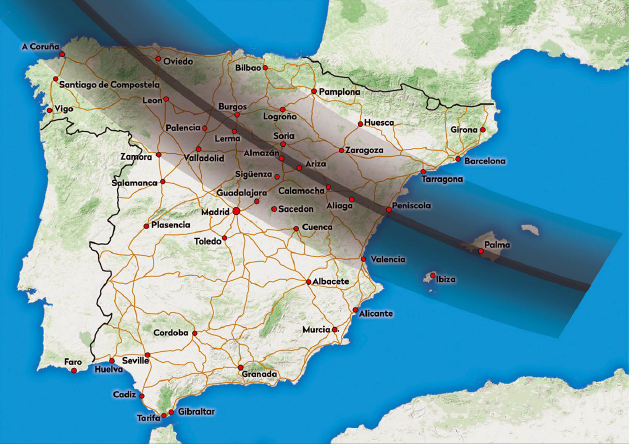
The celestial event, which occurred on August 12, 2026, blanketed parts of Europe in temporary darkness between 19:15 and 21:30 CEST. Because the eclipse path perfectly coincided with the natural evening sunset, the grid managed to avoid a secondary “solar surge” when the sun re-emerged, as daytime was already turning to night. However, the initial rapid drop in solar generation forced international engineers to deploy an unprecedented, highly coordinated balancing act across borders.
Spain bore the brunt of the atmospheric impact, losing approximately 5.0 GW of solar capacity in a matter of minutes. Germany followed with a 2.0 GW generation deficit, while Great Britain faced a drop of roughly 1.1 GW.
“The predictability of orbital mechanics allowed us to prepare for this for years,” stated a spokesperson for the European Network of Transmission System Operators for Electricity (ENTSO-E). The organization established a specialized task force long before the event, running extensive computer models to map out exactly how the shadow would advance across Europe’s primary solar arrays.
To ensure maximum safety margins, grid operators proactively canceled all non-essential maintenance work, keeping cross-border transmission lines fully open to shift power dynamically between nations. As solar generation plummeted, control rooms activated a multi-layered backup toolkit. Rapid-response hydroelectric plants and combined-cycle gas turbines quickly ramped up production to fill the energy void. Furthermore, utility companies utilized utility-scale battery storage systems and localized demand-response initiatives, paying industrial consumers to temporarily reduce their power usage.
In the United Kingdom, green energy suppliers like Octopus Energy incentivized thousands of households to shift their electricity consumption outside of the eclipse window. This combined effort meant that system frequencies remained entirely stable throughout the evening.
Energy experts view the flawless operation as a landmark victory for the global green transition. It proves that a power grid heavily reliant on weather-dependent renewables can comfortably withstand sudden, extreme atmospheric shocks when backed by smart forecasting, robust interconnection, and flexible backup solutions.