by Yana A. St. Clair, Esq.
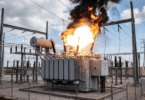
The episode of faults and disturbances brings not only worries but also creates significant legal and regulatory obligations.
The occurrence of faults and disturbances on an electric power system raises not only technical concerns, but also significant legal and regulatory obligations. While no utility can guarantee uninterrupted service or prevent every equipment failure, utilities are expected to investigate significant system events, determine their root cause, assess whether they were reasonably preventable, and implement corrective measures designed to reduce the likelihood of recurrence. These obligations are grounded in a broader legal duty to operate the electric grid in a safe, reliable, and prudent manner.
In the United States, the primary regulatory framework is established by the Federal Energy Regulatory Commission (FERC), which oversees the reliability of the bulk electric system through the North American Electric Reliability Corporation (NERC). NERC’s Reliability Standards—particularly those addressing disturbance monitoring, event reporting, system protection, and corrective action—require utilities and transmission operators to investigate significant events, preserve relevant operational data, and implement appropriate corrective measures where deficiencies are identified.
Utilities are also expected to maintain accurate records of system events and, where applicable, report major disturbances to regulators. Depending on the nature of the event, utilities may have reporting obligations to FERC, NERC, state public utility commissions, or other governmental authorities. These investigations often involve reviewing relay operations, protection system performance, equipment condition, operational decisions, maintenance history, and compliance with applicable reliability standards.
Although no electric system can eliminate all failures, utilities have a continuing duty to exercise reasonable care in the planning, operation, inspection, and maintenance of their systems. Where an investigation reveals that a disturbance resulted from inadequate maintenance, aging infrastructure, improper protection settings, or failure to follow established procedures, the utility may face regulatory enforcement, financial penalties, civil liability, or increased oversight.
An equally important aspect of disturbance analysis is the implementation of corrective actions. Identifying the cause of a failure is only the first step. Utilities are generally expected to evaluate whether modifications to equipment, maintenance practices, operating procedures, training, or system design are necessary to reduce future risk. In this respect, fault analysis serves not only to explain what happened, but also to strengthen the overall reliability and resilience of the electrical grid.
Technical guidance is provided by the Institute of Electrical and Electronics Engineers (IEEE), whose standards support consistent approaches to disturbance recording, relay performance evaluation, protection coordination, and power system analysis. While IEEE standards are generally voluntary, they are widely recognized throughout the industry and are frequently relied upon by utilities, regulators, and courts as evidence of accepted engineering practice.
Finally, electric utilities serve an essential public function and therefore bear a corresponding responsibility for accountability and transparency. Following major outages or widespread disturbances, utilities are generally expected to communicate with regulators and, where appropriate, the public regarding the nature of the event, the results of the investigation, and the measures being implemented to reduce future risk. Such transparency not only satisfies regulatory expectations but also reinforces public confidence in the reliability and resilience of the electric power system.
Disclosure: Please note that none of the information contained within the above column is to be considered legal advice.
Biography

Yana is an American attorney licensed to practice in all State and Federal courts of California. Yana holds a Bachelor of Arts Degree in Political Science specializing in International Relations from UCLA, the Degree of Juris Doctor from Loyola Law School, and a Master of Business Administration Degree from Ashford University. Since the beginning of her undergraduate studies, Yana has been involved in various aspects of the field of Electrical Engineering, where she employs her business and legal knowledge to consulting and advising businesses and individuals on relevant topics of concern. Yana also serves as Editor for PAC World magazine, having been with the publication since its inception. As an attorney, Yana specializes in criminal defense, where she devotes her talents and expertise to fighting for her clients’ rights and freedom.