By Janio Leonardo Los, Ricardo Lira, Marcelo Cascardo Cardoso, Independent System Operator, Brazil
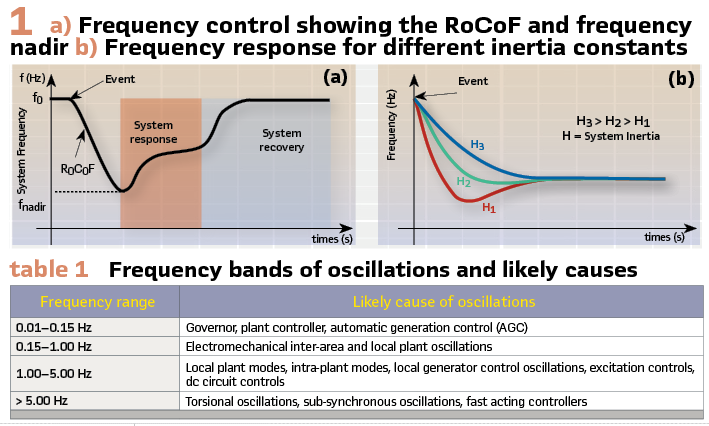
Power systems were designed around large synchronous generators. Their rotating masses store kinetic energy and naturally help the grid resist sudden frequency changes when generation and demand become unbalanced. In a simple way, the traditional system behaves like a heavy mass connected to a spring: a disturbance moves the system, while inertia and damping help absorb the impact and restore balance.
This physical behavior influenced how power systems were planned and operated for decades. Protection schemes, operational procedures, planning studies, and control-room tools were developed for a system in which most dynamic phenomena evolved slowly enough to be followed through conventional SCADA and Energy Management Systems.
This condition is now changing. Wind farms, photovoltaic plants, battery energy storage systems, and distributed rooftop solar are increasing the share of generation connected through power electronic converters. These resources bring important environmental and operational benefits, but they do not naturally provide the same rotational inertia and electromechanical response as synchronous machines. Their behavior during disturbances depends mainly on control algorithms and equipment settings.
As a result, frequency can change more quickly; oscillations may be influenced by converter controls, and a growing part of generation is connected inside distribution networks with limited visibility to the transmission system operator.
Monitoring and control systems must evolve with this new reality. SCADA and traditional EMS remain essential, but they cannot provide a complete view of dynamic behavior between conventional measurement updates. Wide Area Monitoring Systems complement these platforms by using synchronized phasor measurements to detect, process, and present the dynamic response of the grid in real time and support post-event analysis.
The challenge is no longer only to integrate more renewable generation. It is also to understand how the power system is behaving while this transition is taking place
The Changing Physics of the Power Grid
Although the electric power system is one of the most complex systems ever built, its dynamic behavior remained relatively well controlled for many decades. Large hydroelectric generators and other rotating machines provided considerable inertia. Their rotating masses stored kinetic energy and naturally helped the system absorb load variations and disturbances such as short circuits.
With the expansion of inverter-based resources, or IBRs, this basic condition is changing. Wind turbines, photovoltaic generators, and battery energy storage systems are connected to the grid through power electronic converters. Unlike synchronous machines, these resources do not store and release rotational kinetic energy. As their participation increases, the system may respond more quickly and less predictably to disturbances.
Lower kinetic energy reduces the grid’s natural ability to limit frequency variations and damp both natural and forced oscillations. In some cases, IBR controls may also contribute to oscillation when their parameters are not finely tuned or when several converters interact through a weak network. Figure 1 illustrates how system inertia affects frequency response after a power imbalance. Lower inertia results in a faster rate of change of frequency and a deeper frequency nadir, reducing the time available for primary response and corrective actions.
Reactive-power support is especially important in these conditions. Large synchronous generators provide reactive current through their electromagnetic response and excitation systems. For an IBR, however, this response must be deliberately implemented through its control system and must remain within the converter’s current limits.
For this reason, future IBR installations must do more than deliver active power. Advanced control algorithms, energy storage, and dynamic measurements can allow these resources to provide synthetic inertia, fast frequency response, reactive-power support, and oscillation damping. These functions must be properly specified, modeled, evaluated, and coordinated with the rest of the power system.
As the grid’s physical behavior changes, its monitoring and control systems must also evolve. Measurement, alarm, and control strategies must be able to detect these faster phenomena and provide operators with enough information to act preventively or correctively. The objective is not only to collect more data, but to understand how the system is responding while the event is still developing.
Multi-Front IBR Challenge
For operational purposes, inverter-based resources can be grouped into two main categories: large plants connected directly to the bulk power system and smaller resources connected through distribution networks. Although both rely on similar power-electronic technology, they behave very differently in terms of scale, visibility, control, and impact on system operation.
The first group includes large wind farms, utility-scale photovoltaic plants, HVDC systems, battery energy storage systems, and other high-capacity converter-based installations connected to the transmission network. These resources usually have advanced control systems and detailed dynamic models. Before entering commercial operation, their performance is studied, evaluated, and adjusted so that their expected behavior during disturbances can be represented with reasonable accuracy in simulation tools.
Because these plants are directly connected to the bulk power system, they can also be required to provide specific grid-support functions. These may include reactive-power support, voltage control, fast frequency response, synthetic inertia, and fault ride-through capability. Grid codes and ancillary-service mechanisms can encourage or require plant owners to configure their equipment to support the system during abnormal conditions.
The second group includes IBRs connected to distribution networks, such as rooftop photovoltaic systems, residential batteries, small solar plants, electric vehicles, and microgrids. In most cases, these resources are neither fully mapped nor directly measured by the transmission system operator. Individually, they have little effect on the bulk power system. Together, however, they can significantly change net demand, voltage profiles, ramping requirements, and the response of the system to frequency and voltage disturbances.
The interaction between these two groups adds another layer of complexity. A disturbance in the transmission system can affect distribution networks and change the behavior of distributed resources. Their combined response may then feed back into the bulk system through variations in active power, reactive power, voltage, and frequency. At the same time, large transmission-connected IBRs may respond through fast control actions that influence the system over a wide area.
The main challenge is therefore not only the growing number of inverter-based resources, but also their diversity. The future grid will combine large plants supervised by system operators, distributed assets controlled by utilities or aggregators, and millions of customer-owned devices operating according to local settings. Each group has different modeling, control, and observability requirements.
To operate this environment securely, system operators need to know what is connected, what can be observed, what can be controlled, and how each type of resource is expected to respond during abnormal conditions. This makes model validation, grid-code requirements, and coordination increasingly important. Nameplate data alone is not enough to describe the dynamic performance of converter-based equipment.
Brazil: A Living Laboratory for the Future Grid
Brazil provides a clear example of the challenges that many power systems are beginning to face. The country operates a large interconnected network with long transmission corridors, strong power exchanges between regions, and generation located far from the main load centers. At the same time, wind, utility-scale solar, and distributed photovoltaic generation are growing quickly.
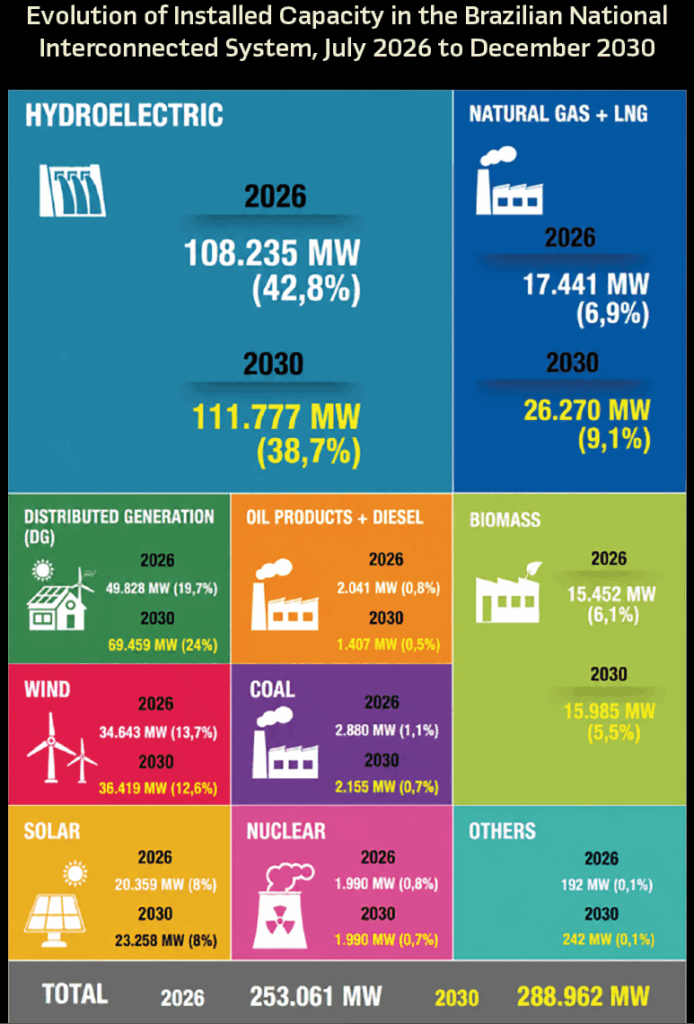
This transition is taking place in a system that was already largely renewable. For many years, large hydropower plants supplied not only energy, but also inertia, frequency response, voltage control, short-circuit contribution, and operational flexibility. Reservoirs also helped compensate for changes in demand and variations in other generation sources. (see the initial figure).
Wind generation added a new geographical characteristic to the Brazilian system. Most of the best wind resources are concentrated in the Northeast, where installed capacity expanded rapidly over the last decade. By 2026, wind capacity had reached approximately 34.6 GW. During periods of strong wind production, the Northeast can export significant amounts of energy to other regions, increasing the importance of the transmission corridors that connect it to the rest of the National Interconnected System.
Solar generation has grown through two different paths. The first is utility-scale photovoltaic generation, mainly installed in regions with high solar potential and available transmission capacity that have reached approximately 20.4 GW. The second is distributed generation, installed in homes, commercial buildings, farms, and industrial facilities. By 2026, distributed generation capacity had reached approximately 49.8 GW.
This distributed generation is much harder for the transmission system operator to observe. Unlike a large power plant, which has a known connection point and monitored output, rooftop solar is spread across millions of consumer installations. Its effect is seen mainly through changes in net demand.
Brazil’s total installed generation capacity reached approximately 253 GW in 2026, with around 104 GW of solar, wind and distributed generation capacity. The country is therefore moving from a system strongly supported by synchronous hydropower generation to a more diverse system in which a growing share of energy is supplied through power electronic converters. Future scenarios indicate that this transformation will continue. Brazilian projections suggest that distributed generation may reach approximately 70 GW by 2030, with additional growth in centralized renewables, battery storage, and other flexible resources.
The Brazilian experience shows that the energy transition is not only a matter of installing new generation. Dynamic models, grid codes, protection strategies, operational procedures, and monitoring systems must evolve at the same pace. As the system becomes more dependent on converter controls, operators need a faster and more synchronized view of what is happening across the grid.
Why Observability Has Become a Critical Requirement
Operating a power system has always depended on knowing its current condition. Voltage, active and reactive power, breaker status, generation, and frequency remain essential measurements, but they no longer show the complete behavior of the grid.
In traditional systems, high inertia and reactive-power support from synchronous machines helped slow and damp dynamic events. For this reason, SCADA measurements acquired every few seconds were generally sufficient for secure operation. As inertia and synchronous support decrease, important dynamic behavior may develop between consecutive SCADA updates and remain unnoticed by conventional monitoring.
Natural and forced oscillations, voltage instability, and fast frequency variations must now be measured and monitored more closely. A local problem that is not detected and mitigated can propagate through the interconnected system and affect other areas.
The frequency and amplitude of an oscillation can also provide useful information about its possible origin. According to NERC, different frequency bands may be associated with governors, plant controllers, inter-area modes, excitation systems, local controls, or subsynchronous phenomena, as shown in Table 1.
Observability is therefore becoming more than a source of information. It is part of the control and protection strategy. Automated actions, oscillation monitoring, event detection, and operator alarms depend on measurements that are fast, synchronized, and reliable.
The future grid will not be operated securely by collecting more data alone. Monitoring systems must distinguish normal variations from unstable behavior, local events from wide-area events, and measurement problems from real system disturbances. This is where conventional monitoring reaches its limits and WAMS becomes necessary.
WAMS: Extending Observability Beyond SCADA
SCADA and EMS remain essential for equipment status, supervisory control, alarms, state estimation, and steady-state operation. WAMS complements these systems by extending observability to dynamic phenomena that may develop between conventional SCADA updates. PMUs measure synchronized voltage and current phasors, frequency, and rate of change of frequency, with timing and performance requirements defined by IEEE C37.118.1.
The principal advantage of WAMS is the combination of high reporting rates and a common time reference. Measurements collected at geographically separated substations can be aligned and compared directly, allowing operators and engineers to observe phase-angle separation, regional frequency behavior, oscillations, and disturbance propagation. Time synchronization is therefore as important as measurement speed: it produces a coherent wide-area view that conventional, non-synchronized monitoring cannot provide.
These measurements support both real-time monitoring and post-event analysis. WAMS applications can support:
- Oscillation detection and characterization;
- Damping estimation;
- Voltage and frequency monitoring;
- Islanding Synchronization & Blackstart
- Disturbance identification;
- Model validation;
- Correlation with SCADA sequence-of-events and protection records.
WAMS should not be viewed as a replacement for SCADA. SCADA identifies equipment states and operational actions; WAMS reveals the synchronized dynamic response between those actions. Together, they provide a more complete view of the power system.
OpenWAMS: An Open and Modular WAMS Platform
The Brazilian WAMS platform, called OpenWAMS, was developed by ONS to provide real-time visibility of dynamic phenomena in the Brazilian power system and to support post-event analysis. The platform brings together the main systems that use synchrophasor measurements in a single open and customizable environment.
OpenWAMS was built mainly with open-source technologies. Its architecture allows users to access data, create dashboards, and add new analytical modules. PMU data is received, processed, time-aligned, and stored in a historian. The platform keeps one year of continuous high-resolution data and preserves event data for long-term analysis. Today, the system has surpassed the mark of 1000 PMUs in operation.
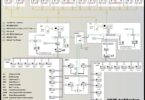
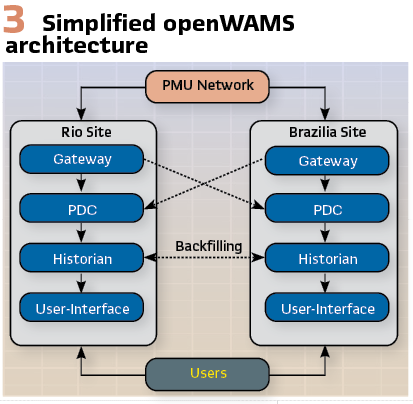
The acquisition and storage infrastructure is replicated at the ONS control centers in Rio de Janeiro and Brasília. Both sites operate in a hot-hot configuration, allowing data to be received and distributed through either location. This structure improves availability and keeps dashboards and analytical applications operating even if one site becomes unavailable. (see Figure 3).
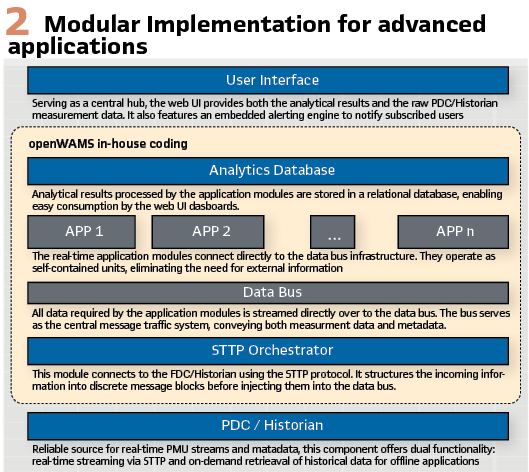
ONS also developed a data bus that distributes synchrophasor data to independent calculation modules. These modules can be created by ONS engineers or developed in cooperation with universities and software companies. Because the analytical applications are separated from the acquisition and storage layers, new functions can be added without changing the operational core of the platform. (Figure 2).
This architecture also supports scalable modules and microservices running in a containerized environment. For visualization, OpenWAMS uses Grafana to create operational dashboards. A dashboard governance process led by platform users was established to keep the screens aligned with operational needs and to ensure their quality and availability.
Some applications have already been developed within the platform:
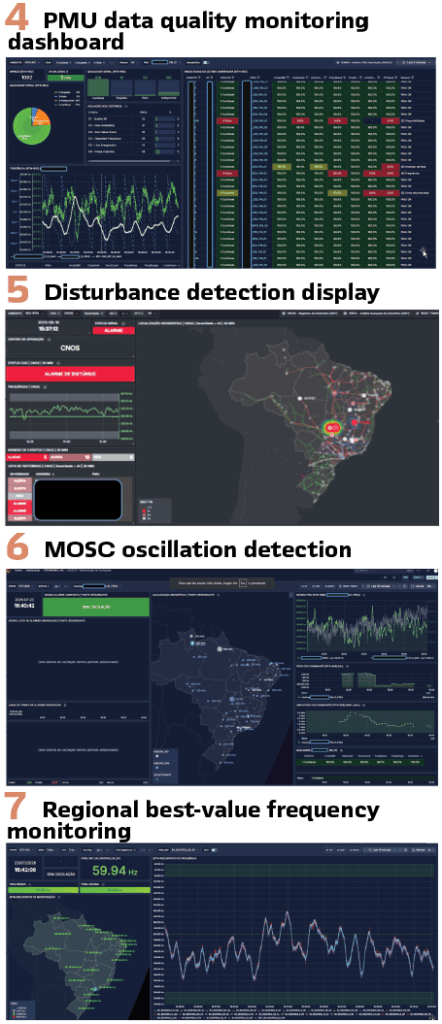
PMUDQ evaluates PMU data quality before the measurements are used by dashboards or analytical applications. It checks quality bits, data availability, zero-frequency values, frequency variation, noise, line energization, and possible phase inversion. Its purpose is to prevent unreliable data from reaching operational users and advanced calculations. (see Figure 4).
DIST detects and pre-classifies disturbances by monitoring abrupt changes in frequency, voltage, and current. The results are combined with SCADA sequence-of-events information to help operators identify the possible cause and severity of the event. (see Figure 5).
MOSC is currently under testing and monitors natural and forced oscillations in real time. The application is being developed to identify oscillation modes and provide information about the dynamic security condition of the system. (Figure 6).
BEST-VALUE selects a reference frequency measurement for each region from a group of available PMUs. This provides a reliable reference value for frequency monitoring and supports the identification of electrical islands. (Figure 7).
Beyond the current OpenWAMS applications, ONS is also developing complementary PMU-based projects focused on other operational needs.
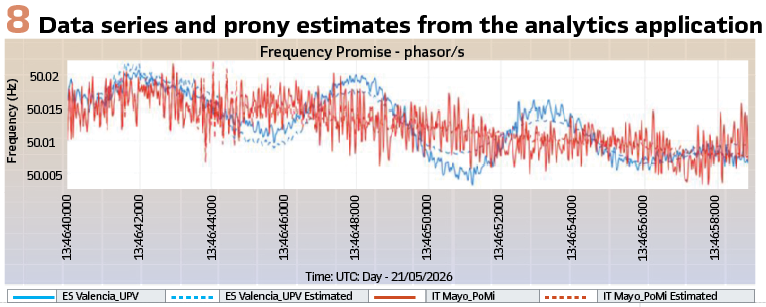
OpenPlot is a tool for performance analysis of the National Interconnected System (SIN) based on synchronized phasor measurements (PMU). It features capabilities such as historical data analysis and management, graphical visualization of synchrophasor quantities, analysis of transient oscillations, identification of oscillations during normal operation, and the detection and localization of events such as switching, load loss, generation loss and islanding.
Full Monitoring combines synchrophasor measurements with THD information to improve the real-time assessment of dynamic performance and power quality.
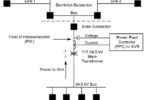
SEP-PMU explores the use of synchronized measurements in wide-area protection and Special Protection Systems.
Multi-Infeed focuses on AC/DC interactions in the SIN, using synchrophasors, THD, and oscillography to support the detection and analysis of commutation failures in HVDC converter stations.
Together, these projects expand the use of PMU data beyond monitoring and strengthen the role of synchronized measurements in system protection, disturbance analysis, and operational security. (Figure 8).
These applications are being developed by ONS engineers and programmers together with universities and specialized software companies. This approach keeps the technical knowledge within ONS while allowing the platform to continue evolving.
In the next stage, OpenWAMS is expected to include machine-learning and artificial-intelligence methods to support event detection, analysis, and reporting. The goal is to provide operators and engineers with a first assessment of dynamic events and improve the platform’s ability to monitor the Brazilian power system as inverter-based generation continues to grow.
Conclusions
We are facing an important change in the power system that goes beyond the generation mix. As wind, solar, batteries, and other inverter-based resources expand, part of the system response is moving from the natural behavior of rotating machines to functions defined by control software.
Brazil is already experiencing this transition. Its system combines large hydropower plants, long AC and HVDC transmission corridors, concentrated wind and solar generation, and millions of distributed photovoltaic installations. These resources support a highly renewable electricity supply, but they also create new operating conditions related to inertia, voltage support, short-circuit strength, and dynamic behavior.
SCADA and EMS are essential for system operation, and it will continue, but they do not provide a complete view of fast dynamic phenomena. WAMS extends this observability through high-speed synchronized measurements, allowing operators and engineers to follow frequency, voltage, phase angles, oscillations, and disturbances across the interconnected system. OpenWAMS was developed to provide this capability in a single open and customizable platform. Its architecture combines acquisition, time alignment, historical storage, visualization, data-quality assessment, disturbance detection, and oscillation monitoring. The separation between the operational core and the analytical applications also allows the platform to evolve as new requirements arise.
The next steps include the development of new analytical modules and greater integration with SCADA events, protection records, dynamic models, and artificial-intelligence tools. These resources can support faster analysis and better operational decisions, but their results will always depend on reliable measurements, correct timestamps, and good data quality.
WAMS is therefore becoming an important part of the infrastructure required to operate the future grid. Its main role is simple: transforming synchronized measurements from different parts of the system into a clear view of how the grid is actually behaving.
Biographies:

Janio Leonardo Los is an electrical engineer at the Brazilian Independent System Operator, ONS, where he works with SCADA, EMS, WAMS, and synchrophasor technologies. He has experience in power system monitoring, real-time applications, PMU data analysis, and the development of operational tools for the Brazilian National Interconnected System. Janio has contributed to the development and implementation of OpenWAMS, an open and modular platform designed to expand the use of synchronized measurements in system operation. He holds a degree in Electrical Engineering from the Federal University of Santa Catarina and is currently pursuing a master’s degree focused on artificial intelligence applied to power systems.

Ricardo Lira, MSc is a Power Systems Engineer at Brazil’s Independent System Operator (ONS), serving as a core coordinator for the openWAMS project. Bringing over 15 years of global expertise in Energy Management Systems and synchrophasor technology, Ricardo has held key technical roles at GE Vernova (Paris), GE Grid Solutions (São Paulo), and Alstom Grid (Edinburgh). He holds both a B.Sc. and an M.Sc. in Electrical Engineering from the Federal University of Santa Catarina (UFSC, 2010).

Marcelo Cascardo Cardoso graduated in Electrical Engineering from the Federal University of Rio de Janeiro (UFRJ), a Master’s degree (strictu sensu) in Electrical Engineering from the Pontifical Catholic University of Rio de Janeiro (PUC-RJ), and a Post-Graduate specialization (Lato-Sensu) in Systems and Computer Engineering from the State University of Rio de Janeiro (UERJ). He worked at the Electrical Energy Research Center (CEPEL) in 1993 and at FURNAS Centrais Elétricas from 1994 to 1999 with SCADA and EMS Systems. In 1999, he joined the Independent System Operator (ONS), where he served as Manager of the Supervision and Control Systems area in 2006 and as Executive IT Manager in 2017. Since 2022, he has been working as a specialist in the Engineering area with Protection and Control Systems, focusing on Phasor Measurement Units (PMU) and Wide Area Monitoring System (WAMS).