Xxx PAC World: When and where were you born?
S-J.L.: I was born in November 1955 in Seoul, Korea.
PAC World: Where did you grow up and where did you go to school?
S-J.L.: I grew up in Seoul and completed all of my education – primary, middle, and high school – there.
PAC World: Did you have any specific interests while in school?
S-J.L.: Having been deeply impressed by two books – Seton’s Wild Animals I Have Known and Fabre’s Book of Insects, I became very interested in observing animals and insects. After school, I spent a lot of time wandering through the mountains and fields, delighting in observing animals and insects.
PAC World: Can you think of someone or something in your childhood that influenced your decision to become an engineer?
S-J.L.: In the sixth grade, I was so inspired by my homeroom teacher that I resolved to become a teacher myself one day. He was a caring and compassionate teacher who looked after his students with warmth. Later, however, my father strongly encouraged me to pursue engineering, and I eventually chose the path of an engineer, ultimately becoming a professor in the field.
PAC World: Where did you go to university and why did you choose that particular oner?
S-J.L.: I went to Seoul National University in Seoul, as it was widely regarded as providing the best education in Korea.
PAC World: Why did you study electrical engineering?
S-J.L.: During my middle and high school years, I developed a strong interest in electrical engineering as I built crystal radios and assembled amplifiers during extracurricular activities. Naturally I chose electrical engineering as my major in college.
PAC World: Did you have any other interests than learning while in college?
S-J.L.: I loved traveling, so I spent every vacation going on trips and camping.
PAC World: Why did you choose a career in academia?
S-J.L.: I originally wanted to become a teacher rather than an engineer. Of all the types of teachers, university professors appeared the most admirable to me and I decided to become a university professor.
PAC World: What made you decide to continue your education and why at the University of Washington, USA?
S-J.L.: I decided to pursue further education because a doctoral degree was required to become a university professor. I chose the University of Washington for my PhD mainly for financial reasons. At that time, I was not in a position to study abroad on my own, and the University of Washington offered me a teaching assistant (TA) position.
PAC World: You have spent years working with different universities in China. What is driving this cooperation?
S-J.L.: “In 2001, I established and managed a research center with government support, and as part of the center’s activities, I conducted collaborative research with several countries abroad. China became a key partner due to its proximity and cultural similarities, allowing us to form strong, long-term research partnerships.
What started as a collaboration between Myongji University and Tsinghua University gradually expanded to include more universities and has evolved into a country-level cooperation.
PAC World: What do you think about the importance of participation in working groups?
S-J.L.: I believe working groups are extremely important because they bring together true experts who share deep insights and practical experience. Unlike academic conferences, which are often purely scholarly, working groups focus on practical and applicable technologies.
This is especially valuable for university professors, as it provides a rare opportunity to learn about techniques and practices they would not normally encounter.
PAC World: You spent more than thirty years teaching at universities. Do you see any difference in the students in the 1990s and today?
S-J.L.: I should note that my experience is limited to Korea. Compared to the past, students today tend to be more individualistic, competitive, and a bit self-centered. Back then, many students came from poor families and devoted themselves fully to studying in order to get into good companies.
Today, most students grow up without financial hardship, so they tend to avoid difficult work. They also prefer comfortable, well-paying jobs in large corporations and see graduate school as too challenging, which has led to much lower enrollment rates than before.
PAC World: You have been involved in research on a wide range of topics – power system protection, distribution automation, smart grids and many others. How do you explain your interest in so many topics and do you have a favorite?
S-J. L: My main research interest has always been in protection. During my PhD, I had to work on distribution automation due to the lack of protection projects. After returning to Korea, I continued projects in both areas. Smart grids are very broad, but I focused only on topics related to protection and automation.
Therefore, my research should not be described as broad. My favorite in protection was fault location, and in automation, distribution system restoration
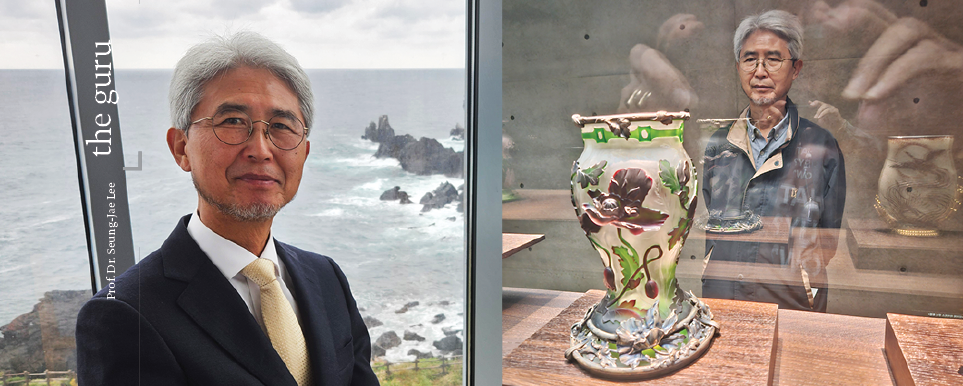
PAC World: You have been participating in and organizing conferences for many years.
What do you think is their role in our industry and why is it important for students and practicing engineers to participate in conferences?
S-J.L.: I think technical conferences play a very important role in our industry. They give engineers and students a chance to learn about the latest research and practical technologies. They’re also a great opportunity to meet experts, exchange ideas, and expand your professional network. For students especially, meeting and talking with leading researchers can be very inspiring and even influence their future careers.
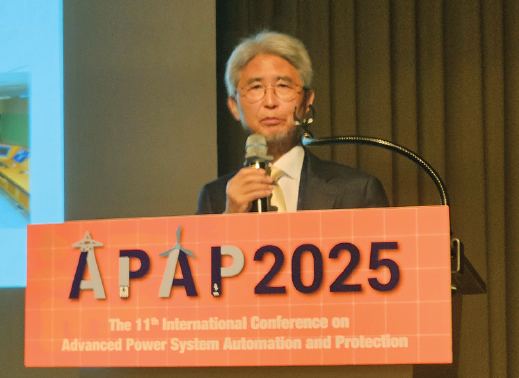
PAC World: You started and have been the Chairman of the International Conference on Advanced Power system Automation and Protection (APAP). Why did you do that?
S-J.L.: When I started APAP, there were protection conferences in Europe and America, but none in Asia. I thought it would be beneficial to have one in Asia as well – both for maintaining international balance and for supporting the activities of my research center (NPTC) which was dedicated to the research on protection and automation. That is why I decided to establish APAP.
PAC World: You have been actively involved in both IEEE and CIGRE. How do you see their role in our industry?
S-J.L.: CIGRE SC B5 and IEEE PSRC have given me, as an academic, valuable opportunities to learn about practical technologies I wouldn’t normally encounter. The same goes for junior engineers in the industry.
The technical brochures, working-group reports, standards, and guidelines they produce not only help engineers in their daily work but also broaden their perspective, inspire them, and contribute a lot to technological advancement in our field.
PAC World: What do you think are the benefits of academics working with industry?
S-J.L.: Collaboration with industry is extremely valuable for professors who may lack practical, hands-on experience. It also plays a crucial role in helping students better understand real-world technologies and provides them with valuable employment opportunities.
PAC World: What do you think is the impact of IEC 61850 on the future of protection and control?
S-J.L.: So far, IEC 61850 has had a greater impact on the hardware side, but I believe its software impact will become more significant in the future.
Until now, the focus has been on implementing existing protection and control functions within the IEC 61850 environment.
Moving forward, we can expect new protection and control functions that take advantage of the vast amounts of data IEC 61850 provides. In particular, the rapid advancement of AI technologies may enable entirely new techniques that were previously impossible.
PAC World: What is the greatest challenge you faced during your professional career?
S-J.L.: Originally, I wanted to become a teaching professor. However, I ended up spending more than 20 years as the principal investigator of large-scale government research projects, dedicating most of my time to research and administrative tasks that I did not enjoy. What I found most difficult to accept was having relatively little time to teach and interact with students.
PAC World: What do you consider your greatest professional achievement?
S-J.L.: My greatest professional achievement is that many of the technologies I have researched have been implemented in Korea’s distribution automation systems, significantly improving the reliability and operational efficiency of the distribution network.
Another one is PROSET – the relay setting software that I developed was used by KEPCO engineers, improving accuracy and reducing time. However, what I take even greater pride in is that many of the students I have trained are now playing key roles in Korea’s protection and automation industry.
PAC World: You have received different awards. Which one do you consider the most important to you?
S-J.L.: The most important one is the Korea Engineering Award, which is the Presidential Award and the most prestigious honor, given each year to only one person with the most outstanding achievement across all engineering fields.
PAC World: Do you believe that we are going to see more AI protection applications in the future?
S-J.L.: Currently, an enormous amount of data is being collected in power systems, so the application of AI is expected to become increasingly active. However, when it comes to individual protection relays, the amount of actual fault data is limited, which poses constraints on AI applications.
On the other hand, I believe AI will be more actively applied at the system level, for wide-area protection, as well as for detecting and analyzing abnormal phenomena.
PAC World: Do you think it is possible to prevent wide area disturbances and blackouts?
S-J.L.: Large-scale blackouts will be extremely limited due to technological advancements. However, in many cases, they have occurred from situations we could never have anticipated or from unexpected errors. Since such events can always happen, I believe it is impossible to achieve 100% prevention.
PAC World: How do you see the future of our industry?
S-J.L.: The widespread adoption of IEC 61850 and digital substations will continue to transform the industry, enabling faster, more reliable, and more flexible protection and control.
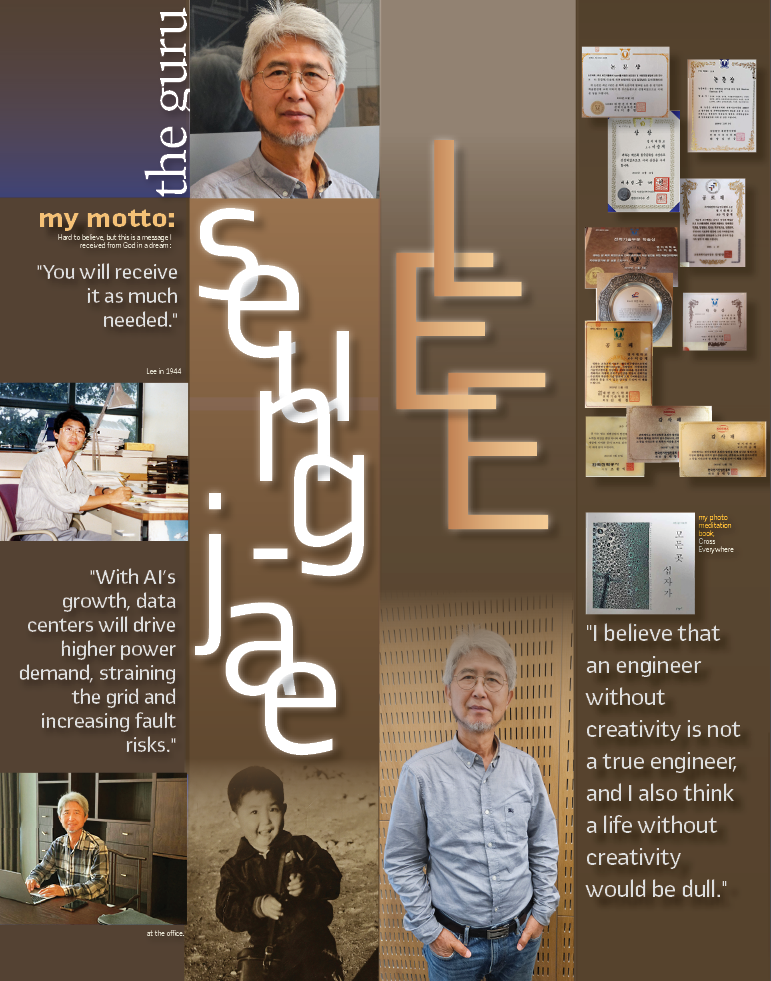
With AI’s growth, data centers will drive higher power demand, straining the grid and increasing fault risks. This will make the protection and automation industry even more crucial, amplifying the role of protection engineers.
PAC World: You are still actively involved in the industry. What keeps you going?
S-J.L.: Actually, I’m not as active in the industry these days. I retired five years ago and have since been teaching students occasionally, focusing on what I enjoy most.
PAC World: How do you balance your active professional life with your family life?
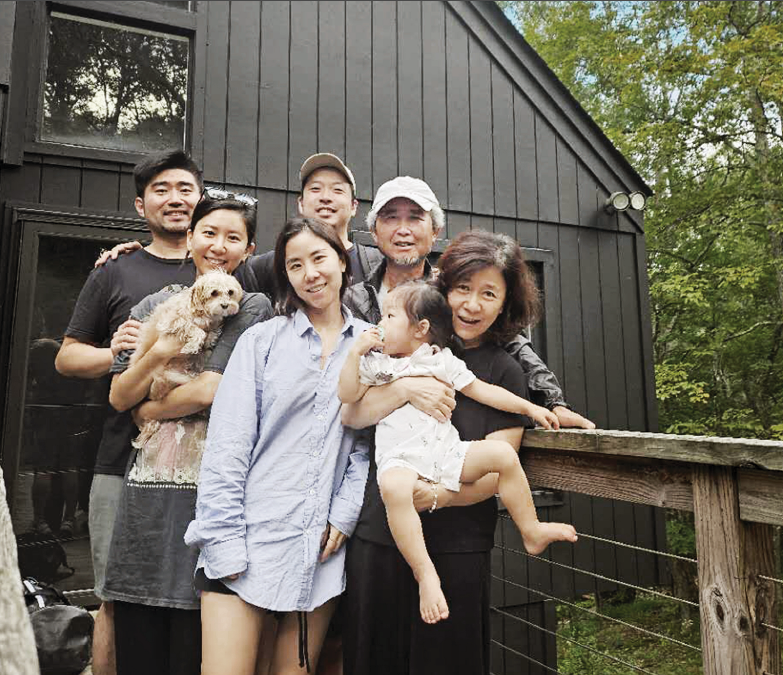
S-J.L.: During the busiest period of my career, I inevitably had to neglect family responsibilities, but in Korea this is generally understood and accepted, which allowed me to focus on my work.
Even so, I tried to spend at least one day of the weekend with my family, and whenever I traveled for work, I made an effort to take my wife or children with me so we could spend time together
PAC World: What do you consider your greatest personal achievement?
S-J.L.: My greatest personal achievement is, without question, my master’s and Ph.D. students. They are now playing essential roles in industry and are widely recognized for their contributions.
Together, we raised our university to the top position in Korea in the field of protection and automation. My next greatest achievement is the publication of my photo meditation book, Cross Everywhere.
PAC World: What do you like to do when you are not working?
S-J.L.: I enjoy spending time in nature, so I go hiking and travel often. I also spend time taking photographs.
PAC World: You travel a lot all over the world. Do you have a favorite place?
S-J.L.: The place I would like to live is Seville in Spain, and the place I would like to visit for travel is the Canadian Rockies.
PAC World: Do you have favorite music?
S-J.L.: My favorite singer is Lara Fabian, and her rendition of “Caruso” is one of my all-time favorites. I also enjoy listening to emotional songs such as “Autumn Leaves” and “If You Go Away.”
PAC World: Your favorite form of entertainment?
S-J.L.: I would say fishing is my favorite form of entertainment. It allows me to relax, enjoy nature, and clear my mind.
PAC World: What is your favorite food?
S-J.L.: I love seafood, particularly crab and shellfish dishes.
PAC World: Do you have a motto?
S-J.L.: My motto is “You will receive it as much as needed.” Hard to believe, but this is a message I received from God in a dream. Interestingly, it aligns closely with my previous motto, “Go with the flow, like running water.”
PAC World: Is there anything you would like to say to the young PAC engineers around the world?
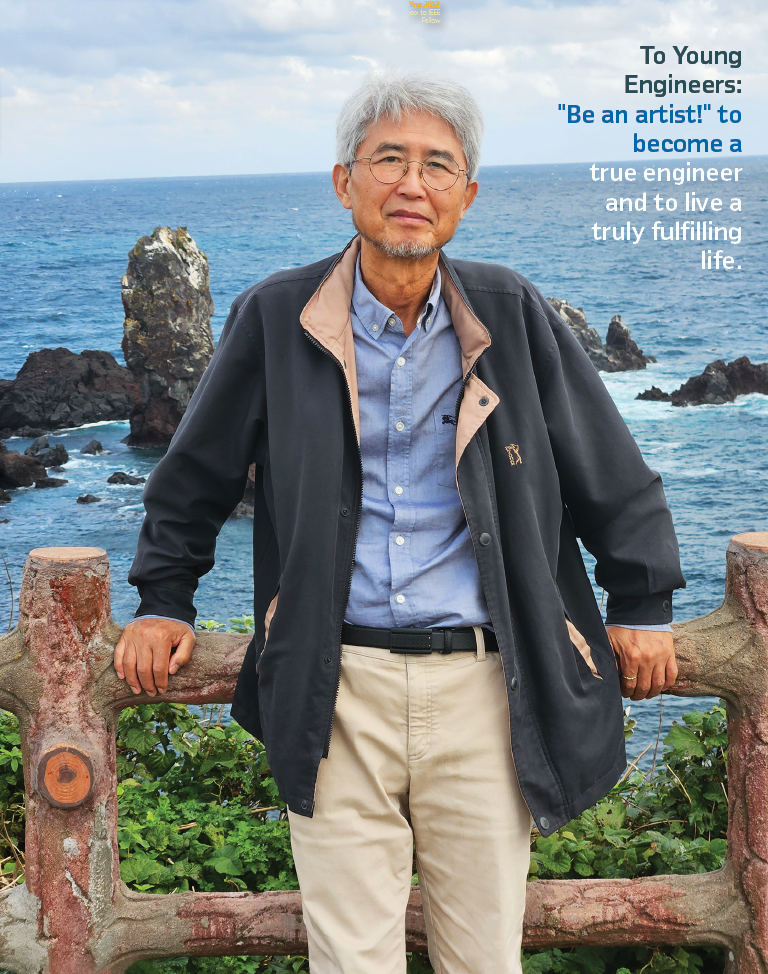
S-J.L.: I believe that an engineer without creativity is not a true engineer, and I also think a life without creativity would be dull.
Therefore, I have always told my students, “Be an artist!” to become a true engineer and to live a truly fulfilling life, and I have encouraged them to engage in artistic activities. I would give the same advice to young PAC engineers as well.
PAC World: Is there anything that we didn’t ask you that you think can help our readers better understand who you are?
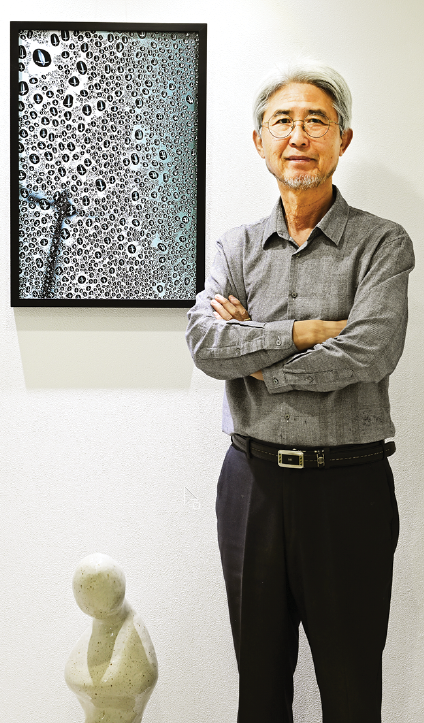
S-J.L.: I spent my entire life as a professor. I enjoyed unfamiliar experiences. So I traveled alone a lot. I trekked the Himalayas by myself and walked the Camino de Santiago pilgrimage route alone for over a month. After retirement, I am living a life completely different from my days as a university professor, pursuing two very distinct paths: as a photographer and as a farmer.
Recently, I have prepared a gallery where I can work and exhibit my photos, and I am cultivating a small piece of land next to it. Through these two pursuits, I aim to dedicate myself fully to the second act of my life.
Biography:
Prof. Seung-Jae Lee received Ph.D. from University of Washington, Seattle, USA and MS and BS from Seoul National University, Korea. He spent 33 years as a Professor at the Myongji University, Korea and 2 years at the Beijing Jiaotong University, China. He is now an Emeritus Professor at Myongji University and also active as a photographer.
Prof.Lee was a Director of Next-generation Power Technology Center (NPTC) from 2001-2018 and founded the International Conference on Advanced Power System Automation and Protection (APAP). He was the representative of Korea for CIGRE SC B5, the Chairman of Power System Protection and Automation, Korea and Editor in Chief of Journal of ICEE.
Prof.Lee is an IEEE Fellow, IEEE Life Fellow and KIEE Fellow and received several engineering awards including the Korea Engineering Award.