The real process bus
by Alex Apostolov, USA
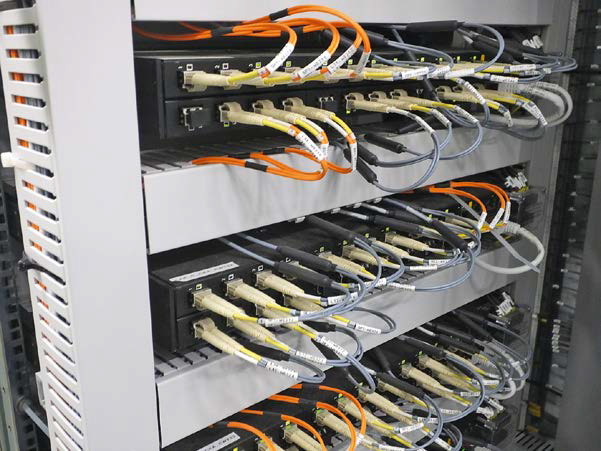
Using IEC 61850-9-2 and IEC 61869-9 sampled values (SV) for current and voltage measurements and IEC 61850 GOOSE for status and tripping signals, the process bus transforms the substation process level into an interoperable, real-time digital environment. This shift enables significant reductions in wiring, improved flexibility, enhanced observability and rigorous standardization of functional interfaces.
A critical clarification is that a remote digitizing device is not a process bus. Remote digitizing units—such as standalone ADC modules located far from the IEDs can convert analog signals into digital form, but they do not publish standardized sampled values over a time-synchronized multicast Ethernet network. Without SV publishing, deterministic timestamping and IEC 61850-compliant communication services, these devices remain outside the definition of process bus. True process bus functionality requires native generation of SV streams and/or GOOSE messages on the station’s real-time network, typically with support for PTP/IEEE 1588-time synchronization, redundant paths (PRP/HSR), and cyber-secure data exchange as defined in IEC 62351.
Process interface devices (PIDs) exhibit different levels of functional integration, reflecting the evolution of digital substation architectures. Level 1 integration consists of simple merging units (MUs) that solely digitize CT/VT signals and publish sampled values or Binary input output IEDs (BIOIs) converting process wired binary inputs or outputs to IEC 61850 messages and vice versa.
These standalone devices provide basic analog-to-digital conversion or minimal status information, but no additional functionality.
Level 2 integration incorporates hybrid functionality, combining MU features with binary I/O for circuit breaker status, isolator positions, and GOOSE-based trip outputs into a process interface unit (PIU).
Level 3 integration adds to the PIU functionality some local processing, for example synchrophasors calculation. These process interface devices (PID) begin to blur the line between process interface and bay-level devices.
Level 4 integration represents multifunctional process interface IEDs capable of executing protection, control, and monitoring functions locally. These advanced PIIEDs may include breaker failure logic, synchrocheck, transformer protection, and condition monitoring algorithms, directly interfacing with sensors and primary equipment. They consolidate several IED roles into a single platform while still adhering to process-bus communication.
The process bus therefore enables granular functional integration, maximizes interoperability, and acts as a foundational enabler for the fully digital, data-centric grid.