By Marco C. Janssen, UTInnovation, the Netherlands
With the introduction of IEC 61850 and the growing abilities of Artificial Intelligence a new approach is fundamentally starting to reshape how utilities operate, the digital twin.
For decades, utilities have relied on a familiar operational model: monitor assets, respond to alarms, maintain equipment on schedule, and react to failures when they occur. While this model has served the power and water sectors well, it is increasingly being challenged by growing system complexity, aging infrastructure, climate volatility, and rising expectations for reliability and efficiency.
With the introduction of IEC 61850 and the growing abilities of Artificial Intelligence a new approach is fundamentally starting to reshape how utilities operate, the digital twin.
At its simplest, a digital twin is a virtual replica of a physical asset or system. But this definition hardly captures its significance. In practice, digital twins are dynamic, data-driven models that continuously receive information from real-world infrastructure such as substations, water treatment plants, pipelines, pumping stations, reservoirs, or electrical networks. They do not merely display information; they simulate behavior, predict outcomes, and help operators make better decisions before problems arise.
Think of it as moving from “seeing what is happening” to “understanding what will happen next.”
Traditionally, utility control systems such as SCADA have focused on monitoring and supervision. Operators receive alarms, assess conditions, and respond. Valuable as these systems remain, they are in essence reactive. A digital twin adds a predictive layer. By integrating operational data, historical performance, hydraulic or electrical models, weather inputs, and other information such as maintenance records and customer data, utilities can test scenarios before implementing actions in the field.
For example, a water utility preparing for an extreme rainfall event. Rather than waiting for reservoirs to overflow or networks to experience pressure instability, operators can simulate the impact of different operating strategies in advance. Should pump schedules be adjusted? Reservoir levels lowered? Flows redirected? Instead of relying on intuition alone, decisions can be informed by evidence generated in a virtual environment.
The same principle applies in power systems. Grid operators increasingly face fluctuating loads, distributed renewable generation, energy storage systems, and variable demand patterns. A digital twin allows operators to test how the system will respond to outages, demand surges, equipment failures, or renewable intermittency before those events actually occur. The result is greater resilience and faster decision-making.
Maintenance may be where digital twins deliver their most immediate value. Utilities have long relied on preventive maintenance schedules by repairing or replacing equipment based on time intervals rather than actual condition. Yet equipment rarely follows a calendar. Some assets deteriorate faster than expected, while others remain healthy well beyond scheduled intervention dates.
A digital twin, by continuously comparing real-time operating conditions against expected performance, can help identify anomalies early and predict failures before they happen. A pump consuming slightly more power than normal, a transformer operating outside thermal expectations, or a valve showing subtle performance degradation may indicate an emerging issue. This brings condition-based maintenance to a next level.
Of course, digital twins are not a silver bullet. I think that their effectiveness depends heavily on data quality, system integration, and organizational readiness. Poor instrumentation produces poor models. Fragmented operational systems limit visibility. And perhaps most importantly, utilities operators need to learn to trust the digital twin, and they may be understandably cautious about relying on algorithmic recommendations, similar to the cautious response to the introduction of digital relays and automation into the substation.
Despite these challenges, I think that the direction of travel is clear. Utilities are moving beyond simply digitising information toward simulating operations. The future control room will not only tell operators what is happening, it will increasingly show what is likely to happen next and recommend the best course of action.
In an industry where reliability, resilience, and efficiency matter profoundly, that shift may prove transformational. The digital twin is not just another technology trend. It will most likely become the new operating model for power and water utilities in the near future.
Biography:
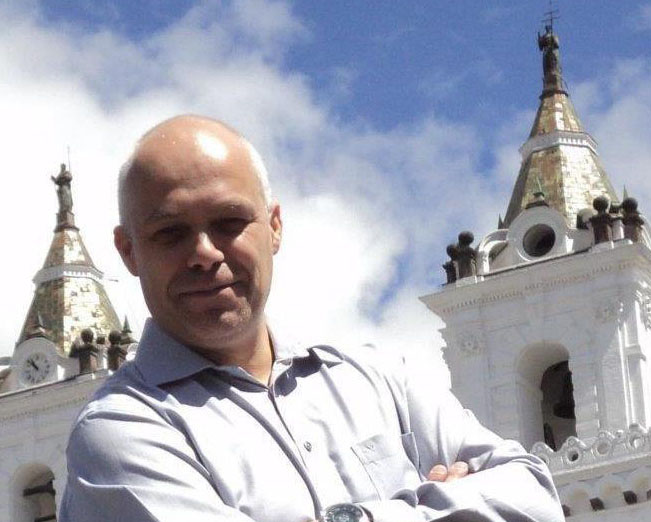
Marco C. Janssen is the CEO of UTInnovation and the former VP of Operational Excellence at TAQA, Digital Grid Leader for Latin America at EY and Director of the Smart Grid PMO at DEWA. He received his BSc degree in Electrical Engineering from the Polytechnic in Arnhem, Netherlands and has worked for over 33 years in the field of Power and Water O&M, Digital Transformation, Protection, AMI and Distribution and Substation Automation. He was a member of IEC TC57 WG 10, 17, 18, 19, the IEEE PES PSRC and CIGRE B5 and D2 WGs. He was the convenor of D2.35 and editor of the Quality Assurance Program for the Testing Subcommittee of the UCA International Users Group. He holds one patent, is the author of the book titled “Recreating the Power Grid”, has authored more than 53 papers, is co-author of 4 Cigre Technical Brochures and 2 books on SmartGrids and Electrical Power Substations Engineering and is the author of the “I Think” column in the PAC World magazine.