by Thomas Schossig, OMICRON electronics GmbH, Austria
Since the very first edition of PAC World, Walter has been a valued contributor to our magazine.
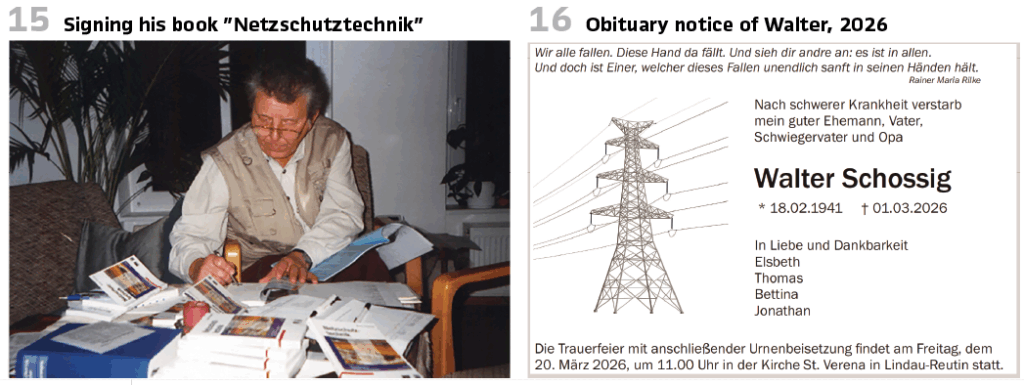
His first paper, “Introduction to the History of Selective Protection” was published in 2007. Over 75 issues, he covered the full spectrum of protection, earth-fault detection, testing, control, and more. With extraordinary dedication, he drew from his vast archive comprising several thousand references to produce insightful and engaging articles for nearly every issue. As we announced in the last issue of the magazine, Walter passed away on March 1, 2026 (Figure 16).
This article is now on his own history, a history of a life dedicated to power, protection, and history,
Few engineers have witnessed – and helped shape – the evolution of electric power system protection as profoundly as Walter Schossig. His life spans one of the most turbulent periods in European history, from the aftermath of World War II and the restrictions of the German Democratic Republic to the reunification of Germany and the digital revolution in power system protection. Throughout these decades, one thing remained constant: his passion for protection and his willingness to share knowledge with others.
Walter Schossig was born on February 18, 1941, in Arnsdorf, a town that today belongs to the Czech Republic. His earliest childhood memories are inseparable from the traumatic events following the Second World War. He lost his mother when he was just a small child and was raised by her childless cousin and her husband. So, they became his parents. At the age of four, he and his parents were forced to leave their home as part of the displacement of Germans from Czechoslovakia. Carrying only a rucksack while his mother pushed a baby carriage, they made their way through Meißen to Sondershausen in Thuringia, where the family started a new life in the Soviet Occupation Zone.
Despite these difficult beginnings, Walter developed an early fascination with mathematics and physics. A seemingly ordinary event during his childhood would determine the direction of his future. One Christmas Eve, the family’s electricity suddenly failed. A family friend employed by the local utility climbed a wooden utility pole equipped with climbing irons, repaired the fault, and restored the power within minutes. Watching the lights come back on left a lasting impression on the young boy. It was then that he realized the importance of electricity – and the engineers responsible for ensuring its reliability.
Initially, however, his career began underground. Following his father, who worked as an accountant in the potash mining industry, Walter completed an apprenticeship as an electrician in a mine. He soon discovered that working below ground was not the future he envisioned for himself. Looking for new opportunities, he enrolled at the Technical School for Power Engineering “Dr. Robert Mayer” in Zittau, where he studied from 1958 until 1961. (Figure 1). The man next to him would later become his brother-in-law.
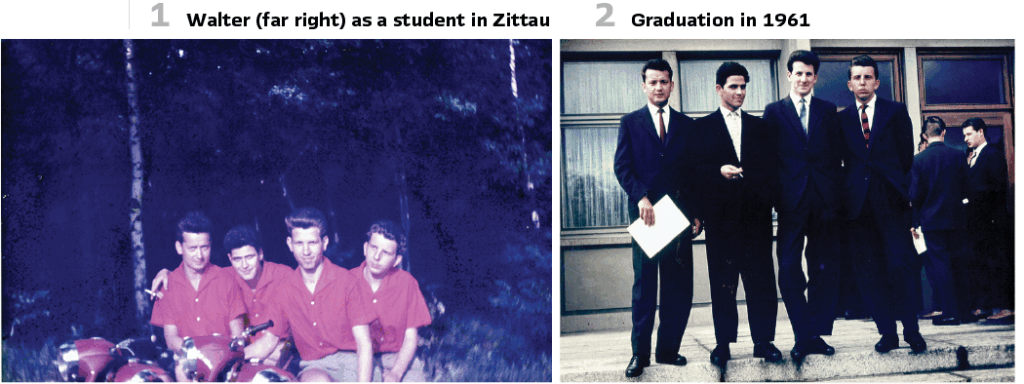
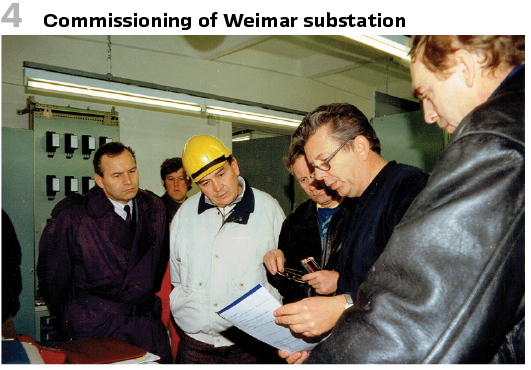
Upon graduation (Figure 2), Walter joined the Bleicherode power station as an electrical engineer. The station operated generators rated at 10 MW and 4 MW together with a 110/50/10 kV substation. It was here that he encountered power system protection, a discipline that immediately fascinated him. Protection engineering combined scientific principles, practical responsibility, and constant technological development. So, he worked as an engineer in network operations. From 1968 to 1996, Walter Schossig served as an engineer and later as Head of Network Protection at the Thuringian utility (Figure 4) in Gotha, and subsequently at ENAG/TEAG Thüringer Energie AG in Erfurt after the German reunification.
Walter appreciated not only the technical challenges but also the close cooperation among engineers throughout East Germany. Since only one domestic manufacturer supplied protection relays (EAW in Berlin), utilities and manufacturers worked together intensively, creating a unique engineering community.
His professional career unfolded during a politically restrictive era. Walter deliberately chose not to become a member of the communist party in the GDR, the Socialist Unity Party (SED), despite knowing this decision would limit his career. For him, engineering mattered more than political advancement. As a consequence, his career progression stopped at the position of deputy team leader. Yet he never regretted his decision. He wanted to solve technical problems- not political ones.
Life as an engineer in the German Democratic Republic presented many obstacles. Travel to Western countries was impossible, access to Western technical literature was prohibited, and even maintaining contact with relatives in West Germany resulted in professional restrictions. Because he refused to end correspondence with family members across the border, Walter was forbidden from participating even in business trips to other socialist countries. He was not allowed to attend the protection conferences in Hungary anymore.
Walter’s utility delivered power to a region close to the heavily guarded inner-German border.
Engineers working near the inner German border required special permits simply to visit substations, and in the most restricted zones protection testing had to be carried out under the supervision of armed border guards.
Both despite and because of these limitations, the responsibility for maintaining a reliable electricity supply remained enormous. Failures on transmission lines carried not only technical but also political consequences. A simple protective trip on the anniversary of the construction of the Berlin Wall led to an investigation by the GDR’s secret service, the Stasi.
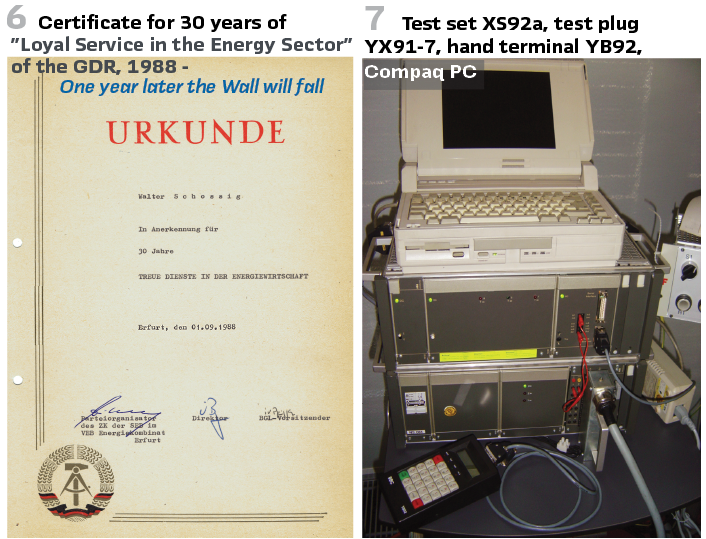
Resources were scarce, spare parts were limited, and engineers frequently had to improvise solutions using whatever equipment was available. Walter remembers these years with pride because, despite all the difficulties, his region experienced only one severe system shutdown during the exceptionally harsh winter of 1979–1980. Keeping the lights on under such conditions demanded creativity, technical excellence, and teamwork (Figure 6).
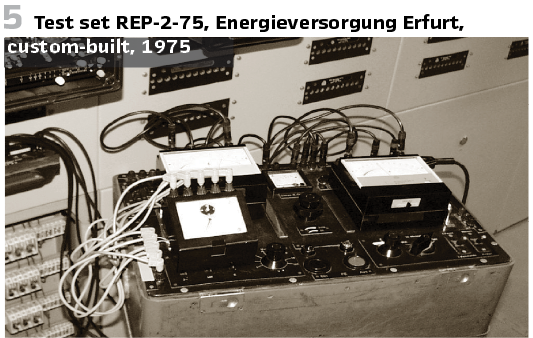
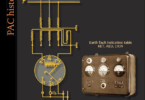
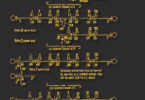
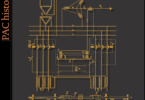
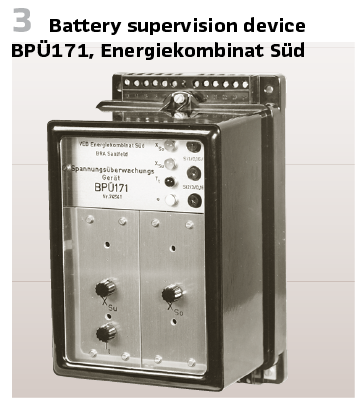
They had to do everything on their own. They built their own test set for electromechanical relays (Figure 5). To supervise batteries in substations they developed a device (Figure 3) which was deployed in power stations and substations throughout Eastern Germany. Asymmetry protection was developed and applied. The test plugs Walter and his team developed were used for any kind of protection in the GDR. They have been adapted to digital protection and are still used widely across utilities in the eastern part of Germany.
The political changes in the GDR and fall of the Berlin Wall in 1989 marked the beginning of a completely new chapter. Walter and his wife were attending a symphony concert in Gotha when news spread that the border had opened. They immediately returned home, turned on the television, and celebrated with a bottle of sparkling wine. Like millions of East Germans, they watched history unfold before their eyes. Yet even in those extraordinary days, the electrical grid still required engineers to keep it operating safely. While many people immediately traveled to the West on the day after the wall came down, Walter first fulfilled his professional responsibilities before making his own first journey across the former border in his Trabant in November of 1989.
German reunification transformed the power industry almost overnight. Suddenly, engineers from East and West Germany had to integrate two electrical systems that had evolved independently for more than four decades. Different protection philosophies, operating procedures, and technologies had to be harmonized. Walter embraced these challenges enthusiastically. The transition to digital protection systems particularly fascinated him.
Long before reunification, in the 1980s, he had privately visited the Leipzig Trade Fair and spent time at BBC/ABB’s exhibition stand, discussing new digital protection technology without revealing which utility he worked for. The engineers from Western Germany recognized him as an expert immediately and a friendship was born.
After reunification, when his utility needed to modernize one of its substations, Walter recommended adopting the new digital relays instead of conventional static protection. His decision proved visionary. The Bleicherode substation became the first installation in Eastern Germany to operate with digital protection, using ABB REL 316 for line protection and RET 316 relays as transformer protection. For the first time Compaq laptops with 286 CPU were used to setup the relays, XS92a was the first test equipment used (Figure 7).
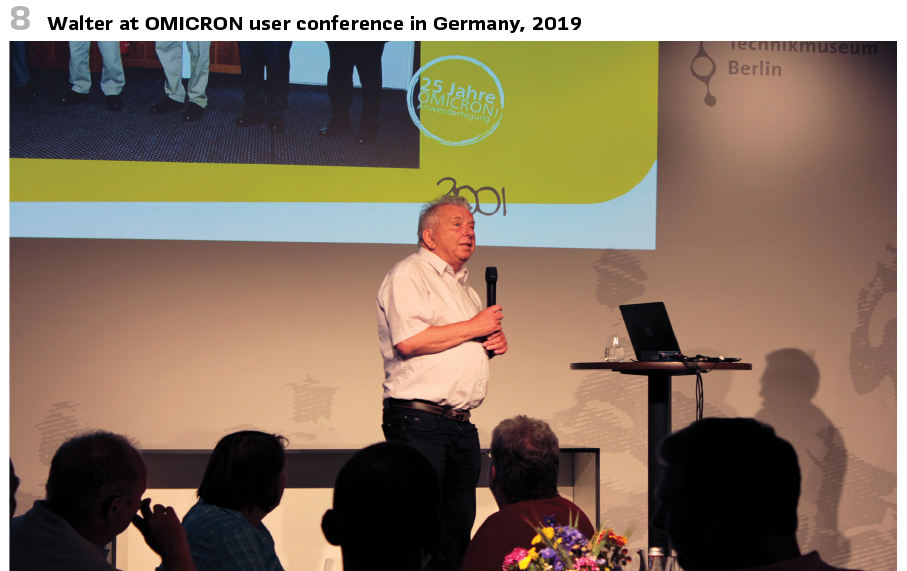
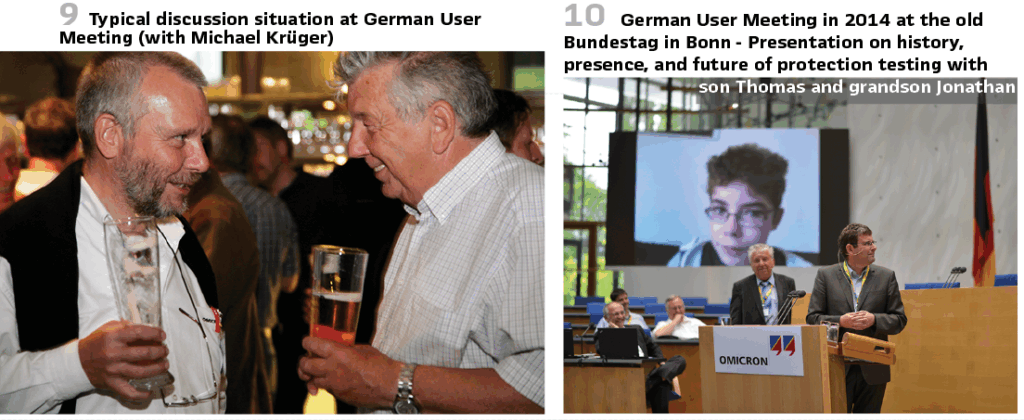
Later, Walter’s team became one of the first customers in Germany of a new unknown company at this time: They bought their first CMC of OMICRON after a visit of Rainer Aberer and Reinhard Kuntner in the early 1990s. Since then, he was a regular attendee at the OMICRON User Conference (Figure 8, Figure 9, Figure 10), serving as a speaker on protection-related topics and a seminar leader, and frequently delivering entertaining presentations on the history of protection and control technology.
He gave his final presentation in Lindau in 2023, titled: “Curiosities from Commissioning, Periodic Testing, and Fault Analysis.”
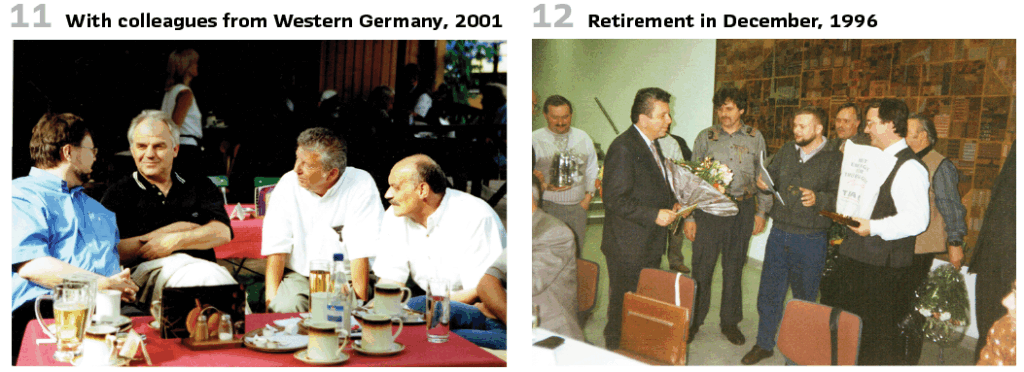
He enjoyed the contact with his Western colleagues after the reunification (Figure 11).
Walter regards the successful electrical reunification completed in 1995 as the highlight of his professional career. He published several papers on the electrical reunification and was the main speaker at the anniversary conference 25 years later in 2020.
Reunification also provided Walter with an opportunity that had previously been impossible. Although he had originally graduated from a technical school rather than a university, his decades of practical experience allowed him to obtain an engineering diploma after German reunification, formally recognizing the expertise he had accumulated throughout his career.
It was common practice among East German energy companies in the 1990s to place employees into early retirement. So, this happened to him as well- in 1996, at the age of 55 years (Figure 12).
The early retirement did not slow him down, however. If anything, his professional activities expanded. He continued teaching seminars across German-speaking countries, writing technical papers, speaking at conferences, contributing to standards, and advising engineers from utilities and manufacturers alike. His telephone rang from early morning until late evening, and his email inbox remained constantly active. Rather than seeing this as work, Walter viewed it as an opportunity to continue helping younger generations of engineers.
Teaching became one of his greatest passions. He particularly enjoyed answering difficult questions and sharing practical experiences accumulated over more than half a century in power system protection. He believed that engineering knowledge should never remain with one individual but should always be passed on.
His fascination with history developed from the same motivation. Walter became convinced that modern engineers often rely too heavily on “black-box” technology without understanding the principles behind it. Studying historical books and technical papers provides insights that remain relevant even today. This conviction inspired him to write a comprehensive chronicle documenting the history of protection, automation, and control technology.
This archive – “The Chronicle” as he called it, comprises 660 densely written pages. It is numbered using a simple four-digit system—naturally in square brackets – with every reference listed precisely and in full compliance with the DIN 1505-2 standard for bibliographic references. Reference entry [8670] was created on February 16, 2026. A Siemens price list from 1933: it would prove to be the final entry. We all had the feeling he knew all those numbers by heart.
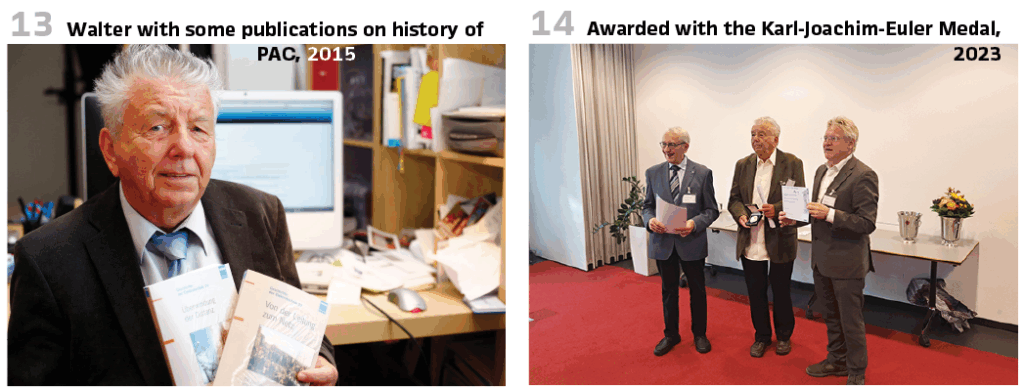
His contributions to the history of protection and control technology were recognized. In 2023, the Association of German Electrical Engineers (VDE) honored him with the Karl-Joachim-Euler Medal for his services to researching and documenting the history of electrical engineering. This honor was conferred during an event in Erfurt—featuring his highly acclaimed lecture on the centenary of Thüringenwerk—which would prove to be his final major business trip. (see Figures 13, 14).
Walter Schossig was also a respected book author. In Germany, he published the book “Netzschutztechnik” (“Network Protection Technology.”) Later co-authored with his son Thomas Schossig, the book went through seven editions and became a highly valued reference among protection engineers. Remarkably, on the very day of his passing, he was still working on final remarks for the eighth edition, which is currently in preparation. (Figure 15).
Collaboration was equally important to him. Whether working with utilities, manufacturers, universities, or standardization committees, Walter always believed that technical progress results from open cooperation. His involvement in German VDE working groups and international technical organizations reflects this philosophy. To young engineers, he repeatedly emphasizes the importance of participating in standards development. Although such work demands considerable effort, it broadens technical understanding and builds valuable professional relationships.
Walter often says that “personal networks are priceless.” Throughout his life, he experienced how cooperation and mutual support enabled engineers to solve even the most difficult problems. His own professional success was built not only on technical competence but also on trust, friendship, and a willingness to help others.
Behind every successful engineer, however, stands a supportive family. Walter frequently credits his wife Elsbeth for supporting him throughout over fifty years of marriage. He was equally proud that his son Thomas chose a career in the electrical power industry and that his grandson Jonathan later helped translate his technical work into English.
Looking back over more than seven decades, Walter Schossig’s life demonstrates that technical excellence is inseparable from integrity, curiosity, and generosity. He experienced war, political oppression, reunification, and technological revolutions, yet remained guided by a remarkably simple philosophy.
His advice to young engineers is straightforward: become involved in standardization, continue learning throughout your career, build strong professional relationships, and never underestimate the value of helping others.
The motto that has guided his life summarizes everything he stands for:
“Help others, and they will support you if necessary.”
thomas.schossig@omicronenergy.com
Biographies:

Thomas Schossig (IEEE) received his masters degree in Electrical Engineering at the Technical University of Ilmenau (Germany) in 1998. He worked as a project engineer for control systems and as a team leader for protective relaying at VA TECH SAT in Germany from 1998 until 2005.
In 2006 he joined OMICRON as a product manager for substation communication products. He is now responsible for the business area Power Utility Communication at OMICRON. He is author of several papers and a member of standardization WGs.